

Happy Asian American Pacific Islander month!
The AAPI designation was coined in 1968 as a political coalition, but Native Hawaiians have long contested it. They are not immigrants like most other Asian American communities; they are the Indigenous people of a sovereign nation overthrown by a U.S.-backed coup in 1893. Today, widespread economic displacement means a majority of Native Hawaiians actually live outside of Hawaiʻi—a crisis recently compounded by the devastating 2023 Maui wildfires and the aggressive land speculation that followed.
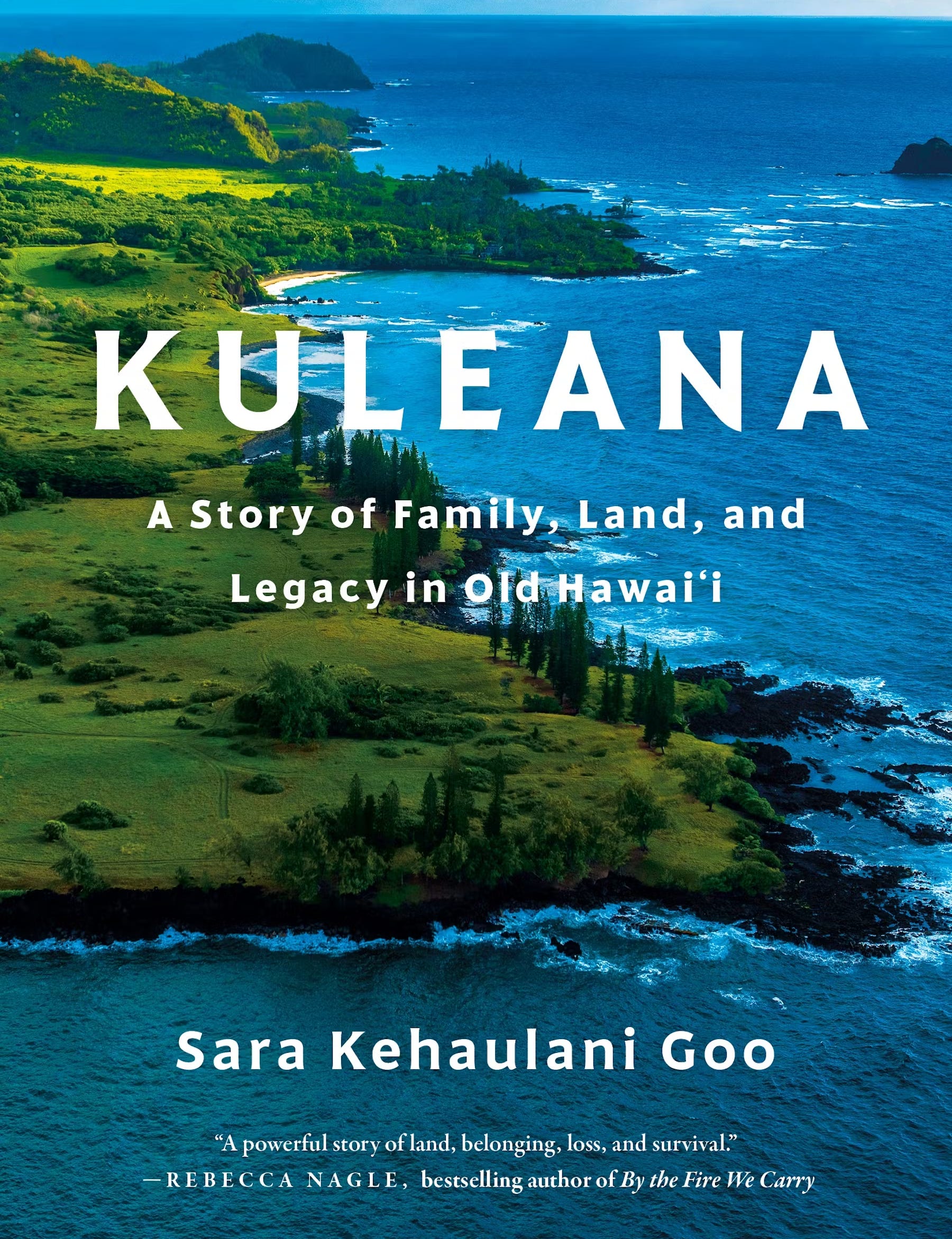
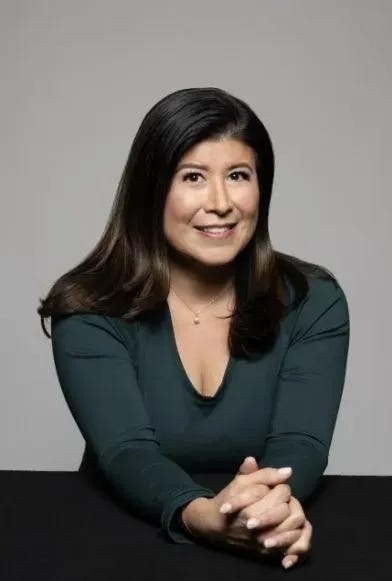
Author and journalist Sara Kehaulani Goo explores this ongoing struggle in her memoir, Kuleana: A Story of Family, Land, and Legacy in Old Hawaii, which centers on her family’s fight to hold onto ancestral land on an island the rest of the world treats as paradise. I first met Goo at an Asian American Journalists Association conference and was struck by the reality of her experience.
Read our conversation below.
What is your port of entry?
My family’s story began in Hawaii—which was not part of the United States. It was its own independent nation. And so even our immigration story began in a kingdom that was overthrown and forcefully absorbed into the U.S., not by the Hawaiian people’s choice. That experience has never really been reflected in what we call the “American experience.” As a kid, it was strange to have people look at my face and immediately assume so much about where I came from. I needed to share a different story.
Within the AAPI umbrella, so many communities get flattened or lost. What has it been like navigating that, especially as someone with mixed ancestry?
Context is everything. I’m a fourth-generation Asian American, so even among other Asian Americans I don’t quite fit—the languages people expect me to speak, the immigration experiences they assume my family had. But the thing people of color often have in common is that others perceive us to be a certain way when we’re actually quite different. The shared experience isn’t a specific history. It’s being misread.
The book is called Kuleana. Walk us through that word.
Kuleana means responsibility but not responsibility in the American sense, which often suggests something you have to do that you maybe don’t want to. It means responsibility with pride, with honor. What I came to understand through this whole process is that kuleana is the thing you are called to do, not just obligated to do. The book is really asking: what do we owe those who came before us, and those who come after? That kuleana is being passed to my children now. It’s not about an asset. It’s about the honor of holding a piece of something that was once part of a kingdom—and keeping that connection to the ʻāina alive.
How did your concept of inheritance shift through this process?
I still think in my Western brain about inheritance as something tangible. But kuleana feels more like a blessing I’m charged with carrying. It made me take stock of my own life. When the generation before you starts to pass away and you realize you’re the adult in the room — you have to take the torch. And out here on the East Coast, raising my children, I started asking: what connection are they going to have to our family’s history? If you come from somewhere, if a culture matters to you, you have to be very intentional about passing it on.
You originally wanted to write a history book. What changed?
I wanted readers to care about Hawaii’s history the way I had come to. But then a crisis happened within our family — a real, concrete fight to save ancestral land and I realized the personal story was inseparable from the historical one. Our family’s situation was emblematic of what so many Hawaiian families are going through or have gone through. Since the book came out, I’ve heard from so many people who’ve said: this happened to my family. This is happening right now. Most Americans don’t realize how much land loss has already occurred. And it’s not a finished story.
Writing about your own family means making choices about how to portray real people. Were there difficult negotiations?
I was upfront from the very beginning. Everyone knew I was working on this, and I asked questions of anyone who would spend time with me. When I had to write about my great-uncle — why he decided to sell his portion of the land — I tried to honor the economics of his life. He didn’t have the same economic cushion we did. Not everyone has the luxury of continuing to pay taxes on land that isn’t generating income. That is just the truth of how many people’s lives work. I gave everyone a full draft before publication. No surprises. And my great-uncle ended up being among my biggest fans.
To most Americans, Hawaii exists as a dream destination, somehow outside of political reality. How do you write into that without losing people?
My goal was never to make people feel guilty for going to Hawaii or for loving it. Hawaii still needs tourism—responsible tourism. And it genuinely is one of the most beautiful places on Earth. What I wanted was for people to understand the context when they visit. Hawaii has a rich culture that is struggling to survive, and significant consequences of colonialism that are still being lived. Both things are true. I wanted to hold both.
Land as a theme resonates across so many diaspora communities. Did you feel that resonance while writing?
Deeply. There’s this idea in a lot of communities where a family spends money to hold onto land that may never give them anything back financially — and it doesn’t matter. Because it’s a piece of us. For Indigenous people especially, the connection to land is about something else entirely. It’s about who you are and where you came from. Once you lose that connection, it’s very hard to come back. We wanted to keep that thread alive even when we couldn’t physically be there. Just to hold the place.
The Hawaiian language revival is one of the most remarkable stories in the book.
Hawaiian was almost gone. In the 1970s, only around 2,000 people were still speaking it—including my great-grandmother, who was one of the last native speakers of her era. The language had been suppressed, used to make Hawaiian people feel ashamed of who they were. Children were punished for speaking it. And now there are 20,000 speakers. Children are learning it in immersion schools. Someone told me once that when a culture loses its language, it loses everything else very quickly after. The Hawaiians came so close to that edge. The fact that they’ve pulled back is extraordinary.
What does the Hawaiian language contain that English can’t hold?
Precision about the natural world that reflects how people actually lived in it. In Hawaiian, there are dozens of different words for rain—a light drizzle, a short burst, a thunderstorm. Same for wind, same for surf. Why? Because when you live your life on an ocean, the specific conditions of weather and sea determine whether you can fish, whether it’s safe to go out. Of course you need precise language for that, it’s a matter of survival. Whereas in English we just say: it’s raining. I started learning Hawaiian while writing the book, and it opened things up that research alone never could have.
You write about raising your children on the East Coast and the work of keeping culture alive across distance.
It requires intention. Left to its own devices, American culture fills every available space —and it’s not that it’s bad, it’s just the default. If you want your children to know who they also are, you have to actively create space for it. I wrote this book for my kids, for my nieces and nephews, for all my cousins and their children. Not as a lecture — as a record of who we are and where we came from. A story they can hold.
What do you hope diaspora and immigrant readers specifically take away?
This book is for anyone interested in generational connection. How do we find our way back to the thread between ourselves and our parents and grandparents, and how do we carry it forward? If you’ve ever felt the pull of a place your family came from, if you’ve found yourself not quite fitting any one category, if you’re a parent wondering how to give your children a sense of something beyond the immediate — I think it will speak to you. Knowing our own stories helps us navigate the world better. That’s what a port of entry really is: the particular place and history through which each of us arrived. It’s what makes us different. And it’s what we share.