


I never knew that my Papa’s first job in America was delivering food on foot, walking block after block while my mom stayed home, three months pregnant with me, soothing her inflamed feet in a bucket of water. He’d join her in the bucket when he got home — both of their feet swollen, one from bringing life into this world, the other from working to make sure that life would be cared for. This week, that image came back to me, because of the growing list of immigrant fathers shot dead by federal immigration officers, and their children who are left to carry what happened to their parents.
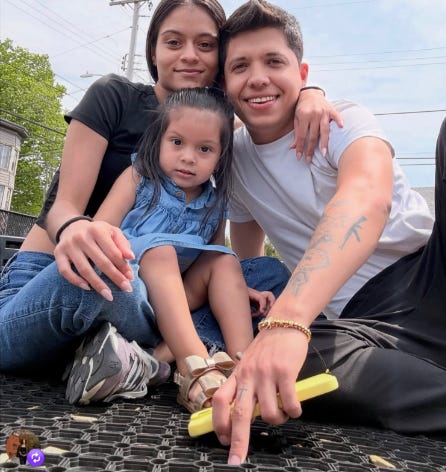
A three-year-old watched her father, Johan Sebastian Guerrero, an immigrant with dreams and hopes of his own, get shot in Maine while she sat in the backseat in her Bluey pajamas. Bluey, the beloved British cartoon about a mum, a dad, Bluey, and her little sister Bingo. My kids, granddaughters of first-generation immigrants, adore it. Guerrero was twenty-five, a husband and a father with every right to be in this country. Agents had reportedly been watching a nearby home, believing someone undocumented lived there and when Guerrero left in his own car, they tried to pull him over. DHS says the vehicle “attempted to flee the scene” and that the officer, fearing for public safety, opened fire. No one on scene was wearing a body camera, and no footage has surfaced to confirm that account. He wasn’t even the man they were after. A neighbor said she could hear his wife’s cries carrying from the street, a sound she said she’d never forget.
Days later, the Associated Press identified the agent as David Brouillette, a 37-year-old Army veteran who, according to his own relatives, has struggled with serious mental illness since childhood and has a documented history of violent, frightening behavior — the kind that led his ex-wife and daughter to cut off contact out of fear for their own safety. Members of Congress are now demanding answers about how someone with that history ended up carrying a government-issued gun on American streets.
Six days before Guerrero, in Houston, ICE killed Lorenzo Salgado Araujo. Fifty-two years old, thirty-five years in this country, a builder who’d spent decades putting up homes for other families while raising three sons of his own. He had no criminal record and his papers were almost finalized after 35 years of trying. Agents followed his work van that morning and opened fire even though he wasn’t their guy either. His oldest son, Ronaldo, a teacher, learned what happened from a video circulating online before anyone told him directly. He drove straight to the hospital where he and his brothers were born, hoping it wasn’t true. Now that same son stands in front of cameras trying to hold himself together, and I think about how a child of an immigrant father carries a grief nobody else can weigh.
In the year and a half since this crackdown began, federal agents have opened fire on at least 23 people. Numbers like that can start to blur into abstraction — until you remember every one of them left behind a loved one: often a child, young or grown, who will spend the rest of their life working out what their parent survived.
At some point, when your parents are immigrants, a switch goes on—you realize that even as a young person, you have to worry about your parents, that you have to protect them from a country that was never built to be gentle with the people who end up here. Though they are the adult and you are the child, the roles quietly reverse. And as you get older and learn just how they survived, you will ache over their hardships, even though they will tell you it was all worth it.
My parents never told me the bucket story until my third trimester with my first baby—that my mom had been too afraid to walk outside alone, afraid she wouldn’t find her way back, cooped up all day in the apartment because she was undocumented, young, new to this country. By then my own feet were swollen, my back hurting from pregnancy-induced sciatica and on a particularly painful day in my ninth month, my mother finally told me how they used to soothe their feet together in that bucket, and what she’d been afraid of the whole time.
My almost seventy-year-old father is a reflection of all these men. I keep picturing him in Guerrero’s seat, in Araujo’s van. I am bawling as I write this. These last few years have asked so much of anyone who is the child of an immigrant father who worked tirelessly, who gave up things we will never truly know, so that we could grow, so that we could be here.
In the land of the free.