


Reporter’s Notebook: Deeply embedded journalism is a rarity in today’s shrinking media landscape. When we do get the chance to report on the ground, so much of the real story gets left on the cutting room floor. This notebook is a closer look at the raw details, quiet moments, and hard truths that didn’t make the final published piece.
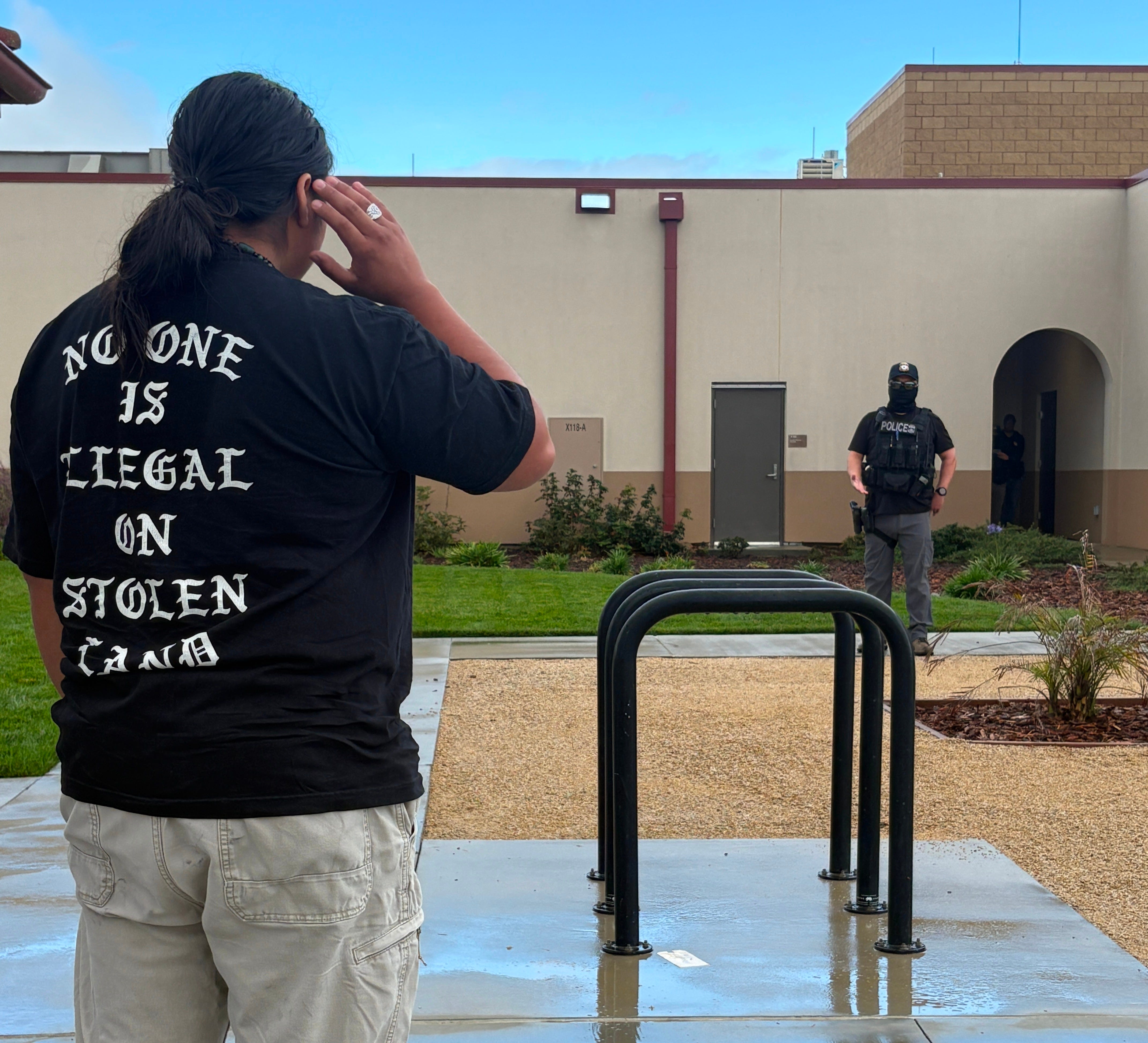
The Santa Maria Inn on California’s central coast used to be a rest stop for Hollywood stars like Charlie Chaplin and Marilyn Monroe. Today, its glory has faded. The town it anchors—Santa Maria, with a population of about 110,000, wedged between wine country and the Pacific Ocean—is shaped now by the people who feed the nation. I stayed here last October while reporting a piece for The Guardian on the immigrant farmworkers being targeted by ICE.
At first glance, Santa Maria looks like every other small Central Coast city with wide open streets, low stucco buildings, a little greenery. But upon a closer look, you’ll see that luxury cars are rare—most vehicles are beat-up trucks and SUVs. On TikTok, local kids film themselves mocking the boredom and the lack of opportunity.
What you don’t see on the surface is that over 80% of the farmworkers here are undocumented. They are the essential, invisible engine of a billion-dollar agricultural industry—the people who pick the strawberries, the broccoli, and the lettuce that end up in your grocery store. The farming season runs nine months, from March through October. The other three months, workers are out of work and out of pay. And right now, both during and after the season, they are living in constant fear.
Hundreds of them have been taken by ICE.
The devastation is often swift and sweeping. On December 27th, just after Christmas, ICE swept through four towns in Santa Barbara County in a single day. One hundred and forty-four people were detained. A third of them were from Santa Maria alone—a massive blow to a town this size. Kids were home on winter break. Their parents left for work in the morning and never came home.
Historically speaking, this is not a new story. In 1954, during the government’s infamous “Operation Wetback,” 1.1 million people were deported to Mexico in a single year. Labor activists at the time charged that the raids were designed not for national security, but to manufacture a labor shortage—driving undocumented workers back across the border to replace them with cheaper, more controllable bracero contract workers.
The structure today looks startlingly similar. As UC Davis agricultural economist Philip Martin points out, the availability of a vulnerable labor force has always been used to hold down farmworker wages. Mexican academic Jorge Bustamante has long argued that a primary function of U.S. immigration enforcement has historically been—and still is—to regulate the price of Mexican labor in the United States.
The Teenage Watchman
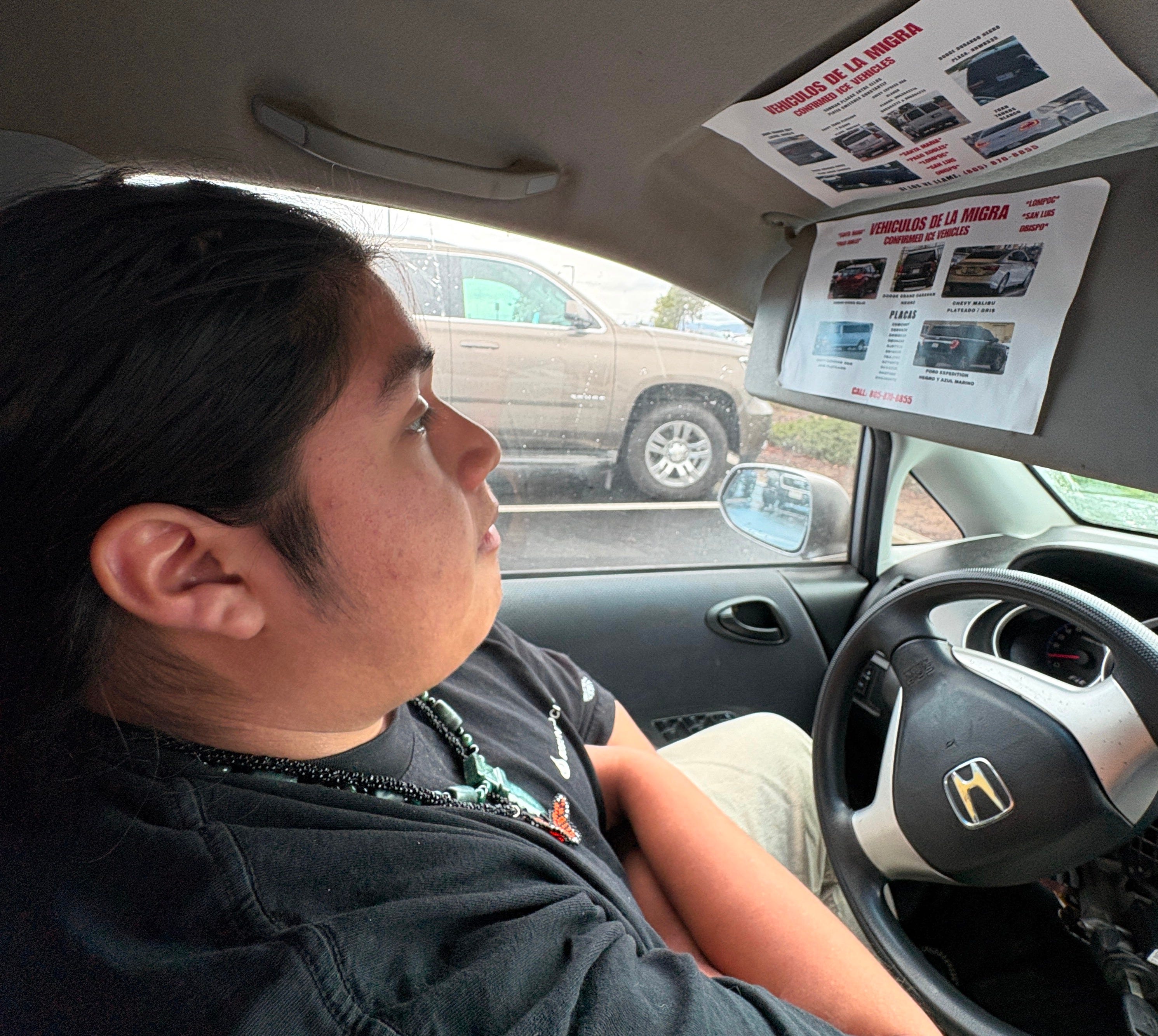
I met Cesar Vasquez on a Sunday night in October, two months before his eighteenth birthday. He had deferred his college acceptance to stay in Santa Maria and work full time for 805 Undocufund, tracking ICE agents, coordinating rapid responses, patrolling the streets, and documenting everything.
We started patrolling at 6 a.m. on a Monday—Indigenous Peoples’ Day, which Cesar noted dryly might be why the streets were quiet. We passed the FBI office, a shuttered hospital that once housed farmworkers, and the tomato fields where his mother used to work and organize against pesticide exposure. Inside the car, his phone buzzed without stopping: local chats, county chats, national chats, ICE vehicle sightings, videos of people being taken from the street.
On his car visor, he keeps a list of ICE vehicle models: Ford Expeditions, Dodge Chargers, transport vans. He pulls it down often, cross-referencing it against the cars we pass. At a local mall parking lot, he pointed to an unremarkable spot on the asphalt.
“That’s where I saw my first kidnapping,” Cesar said.
He retells the story in a daze every time we loop past. Santa Maria is small enough that we go around it often. “ICE agents here are cocky,” Cesar told me. “They know we know who they are, and they don’t care.”
In the back of his car, he keeps the tools of his trade: gas masks, shields, printed lists of know-your-rights resources. Yet, despite the militant nature of his work, Cesar is articulate, passionate and completely unafraid of silence. Multiple people told me independently that he has an old soul. He quotes Martin Luther King, Malcolm X, and Fred Hampton regularly. To process what he witnesses, he sees a therapist. To stay grounded, he meditates, guided by his mentor, Aura.
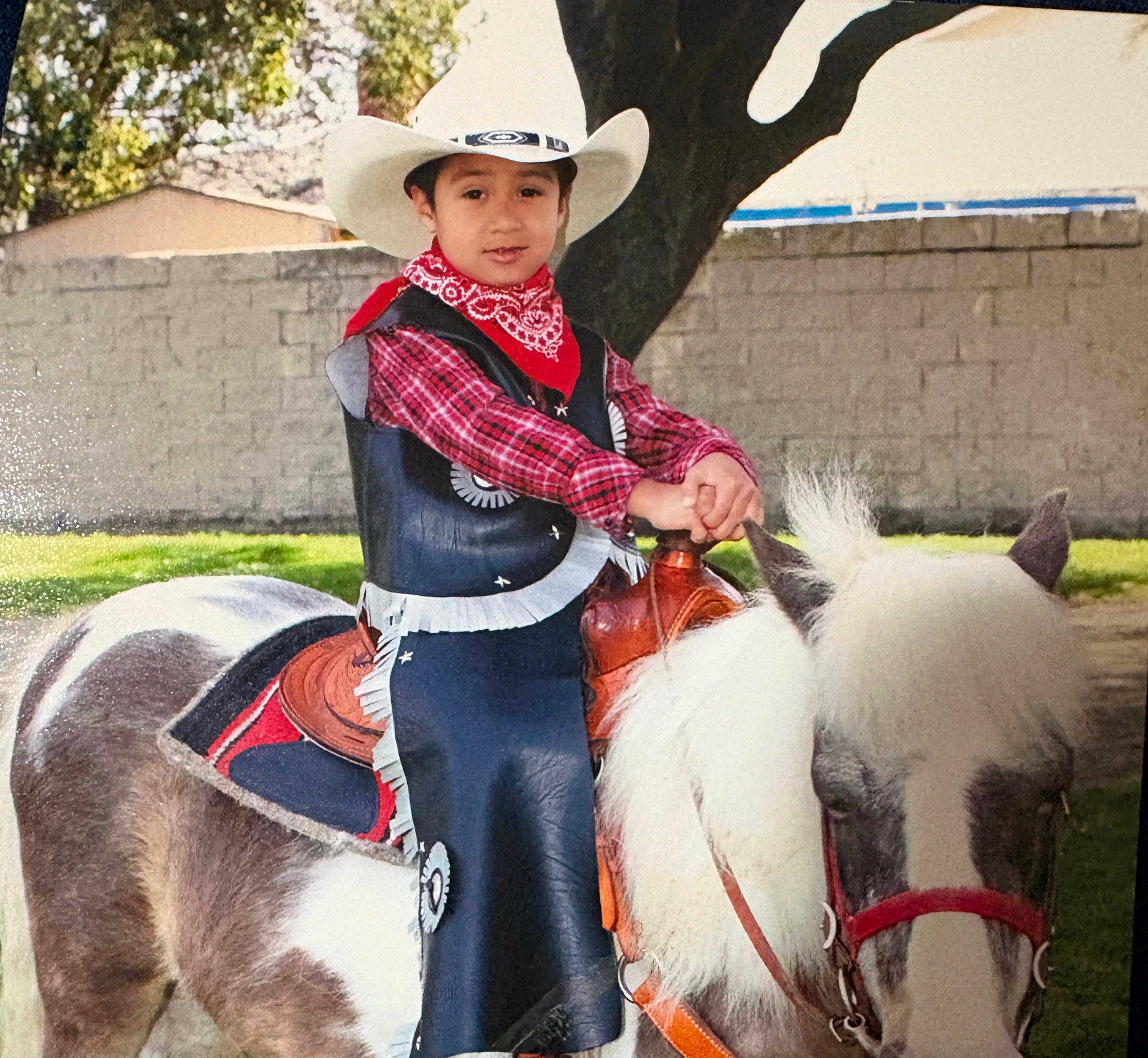
Later, we went to Cesar’s house. In the bedroom he shares with his sister, awards and certificates line the walls, displayed right next to a book about Fred Hampton. I interviewed his mother, Angelica, who crossed the border alone as a child. As a young farmworker, she had organized against the pesticide exposure she knew was making her and her coworkers sick. Now, she watches her son lead the resistance, worrying about him the way mothers do—quietly and constantly.
You can see the realization of the American Dream in their family. His older sister Sam, 25, is a high school history teacher in Los Angeles. Another sister is in graduate school in the UK. They are exactly what this country says it wants to produce and what it promises children of immigrants. Yet, the very system that champions that dream actively tears at the fabric of their community.
“I Feel Guilty About the Families I Couldn’t Save”
The work takes a heavy toll.
“I feel guilty about the families I can’t save,” he confessed to me.
To combat this feeling, he pushes harder. He walks the streets during sweeps, knocking on doors. He broadcasts warnings on Instagram Live and has been chased mid-broadcast.
He told me about a high school senior who was reading The Diary of Anne Frank for class when she got into a car and learned her own family was on the run. He told me about flower vendors who disappeared from their street corners during the raids, only returning when Cesar’s warnings finally reached them. And there were the kids—dozens of them—whose parents simply never came home over Christmas break, leaving a void their teachers wouldn’t discover until school reopened.
The morning I packed up to leave, I asked Cesar something that had been nagging at me the entire trip.
“What is that smell in the air?”
He laughed, the way you do when a question catches you completely off guard because the answer is so obvious to you.
“It’s the strawberries.”
He can’t smell them anymore. They are just air to him now. The fields at dawn, the tractors rumbling down residential streets, the workers bent toward the earth—it’s all just the atmosphere of a life he has always known. It is a life he has chosen to stay inside of and fight for, even when he could have easily left it behind.
Santa Maria is shaped by undocumented farmworkers who feed the nation, yet live in constant fear. Cesar Vasquez, not yet eighteen, patrols the streets to protect families from ICE raids, an old soul carrying the weight of a community.