


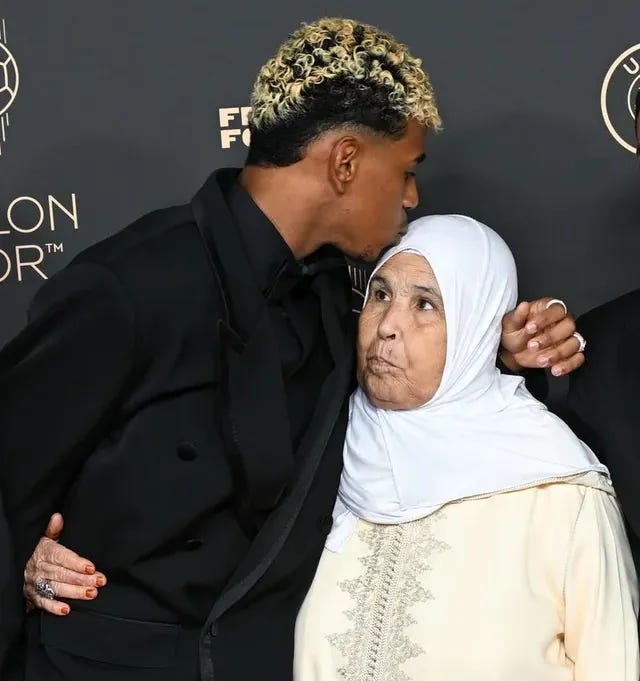
Every time nineteen-year-old Spanish national footballer Lamine Yamal scores, he throws up his hands and signs 304—for Rocafonda’s postal code, the working-class neighborhood thirty kilometers up the coast from Barcelona. Roughly 11,000 people make up the neighborhood, and about half of them are classified as at risk of poverty. His grandmother, Fátima, still lives there—in a house he bought her, because when he could finally afford to move her anywhere in Spain, she said she was staying put.
His signature move is beyond just repping his ‘hood. It also represents how far his family has come—from the bus ride that brought his grandmother to Rocafonda, to the World Cup final in New Jersey last weekend.
In the early ‘90s, Fátima Nasraoui snuck onto a bus in northern Morocco, no papers, no plan beyond somehow getting to Spain. It ferried across the Strait of Gibraltar, and she ended up in Mataró — a Catalan town she’d never seen, where she knew no one, where she’d work mornings, afternoons, and nights until she’d saved enough to bring her family over the exact same way.
The Empire’s Leftover Borders
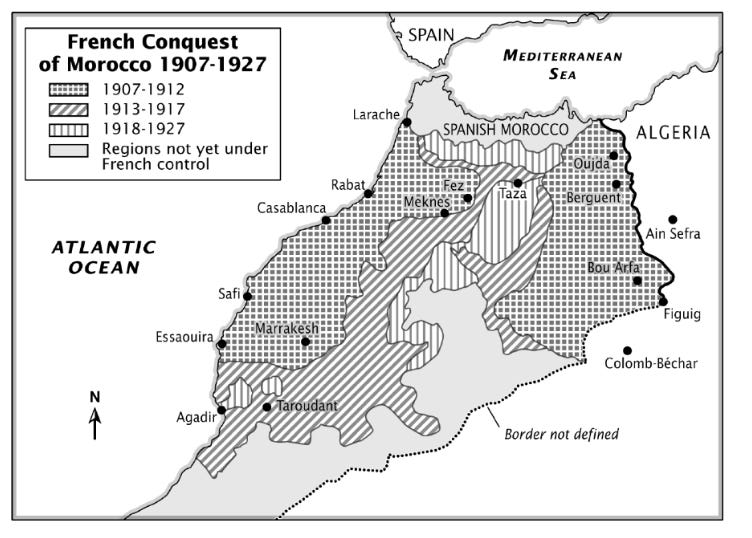
Larache, in northern Morocco, where Yamal’s grandmother and father are from, was once a Spanish colony. In 1912, France and Spain carved up Morocco between them. Spain’s share ran along the northern coast, from Larache on the Atlantic to Melilla on the Mediterranean, meaning Larache sat at the literal edge of Spanish rule. Spain governed it, policed it, and profited from it for 44 years, until Moroccan independence in 1956.
In the 1920s, Abd el-Krim led the Rif War against Spanish troops — one of the century’s most significant anti-colonial uprisings. Spain responded by dropping chemical weapons on the villages. Spanish planes dropped mustard gas over Rif markets, rivers, and civilian settlements from 1924 to 1927 — the first widespread use of chemical warfare in the post-WWI era. Even after independence in 1956, Spain kept two enclaves on Moroccan soil—Ceuta and Melilla—and still holds them today. Independence also created crippling poverty. By the time Fátima was raising her children there, opportunity was scarce and migrating to Spain was a common solution.
Spain Is Probably The Most Welcoming Country in Europe for Migrants
In January 2026, Spain approved a mass regularization program. If you’d arrived before the end of 2025, lived there five months, and had a clean record, you could get legal status and the right to work. Officials expected half a million people to apply but by the June deadline, more than a million actually applied. EU officials privately grumbled that it sent the wrong message: cross without papers, work off the books, wait it out, get legal. That’s exactly what Fátima did. She wasn’t beating the system. She was the system, working as designed.
But, Spain also guards its water like a fortress. The fences around Ceuta and Melilla have been reinforced for years, with Morocco doing a lot of the border-policing for Europe. And when people do reach Spanish soil, “hot returns” can send them straight back before they ever get to file for asylum. Sometimes that policy kills people: in 2014, at least fourteen people—some accounts say fifteen — drowned trying to swim into Ceuta at El Tarajal beach, while Guardia Civil officers fired rubber bullets and tear gas at them in the water. Spain’s Supreme Court shelved the case in 2022. Nobody was held responsible.
The Identities Lamine Didn’t Leave Behind
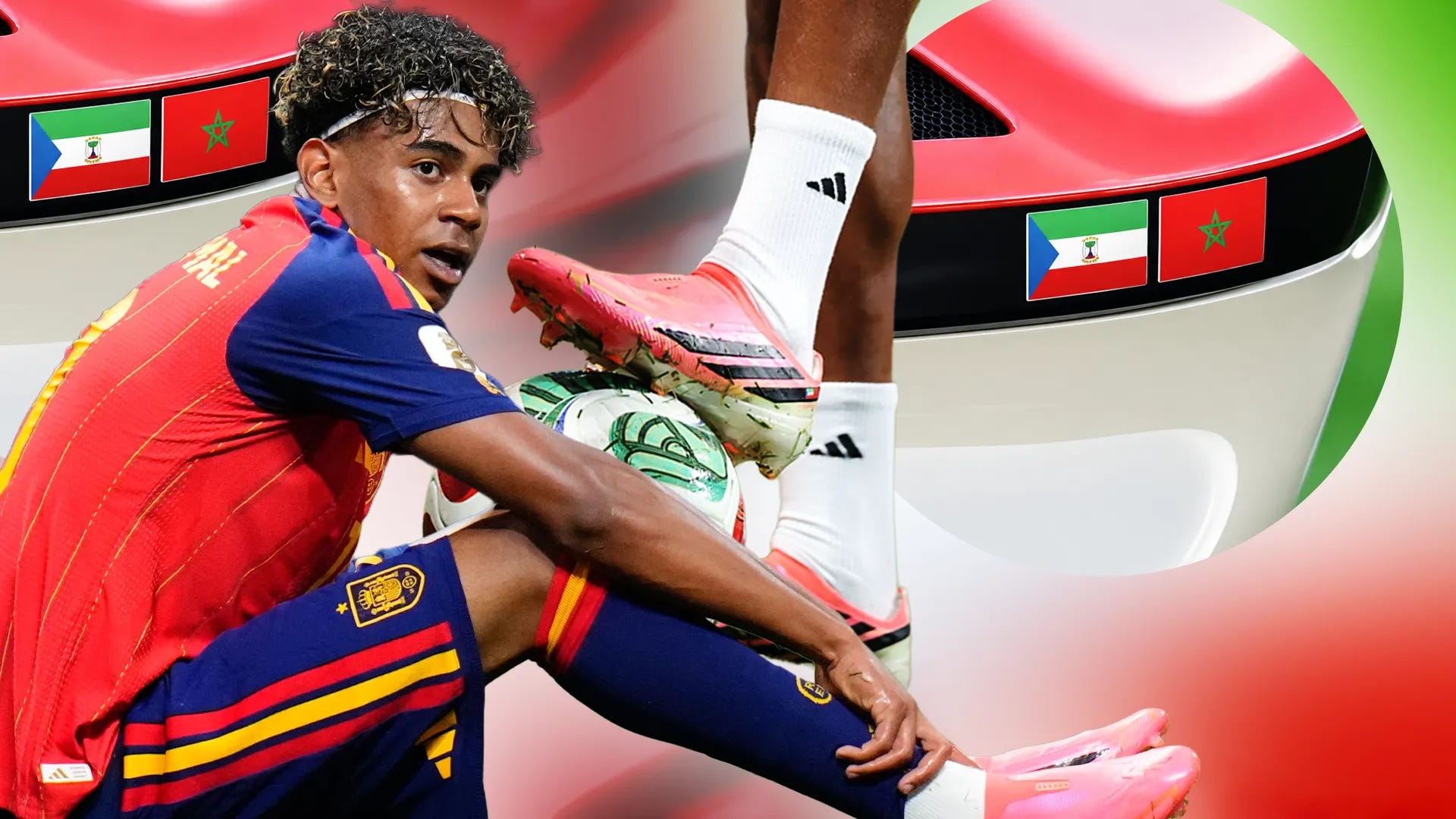
Yamal’s mother carries her own version of this story: her family came from Equatorial Guinea, another former Spanish colony, shaped by the exact same empire. Two colonized places, two crossings, one kid wearing both flags on his cleats and choosing, in the end, to win the World Cup for the country his grandmother snuck into on a bus.
Yamal’s paternal family is Muslim, and Fátima is the person largely credited with anchoring him to his roots. He’s also been unflinching about who he is on the global stage. In May 2026, during Barcelona’s La Liga title parade, he brought out a Palestinian flag and waved it in front of the cameras. It went out to millions within hours. While football often prefers its players keep politics off the pitch, Yamal made the opposite choice.
Yamine is Muslim, Moroccan, Equatorial Guinean, Catalan, and now a World Cup champion for Spain—and a stand-in for a future where Palestine is free and more kids like him make it to the top of the ladder.