

In 2009, archaeologists excavating Fort Shirley—a British colonial trading post on the Pennsylvania frontier — uncovered a small copper alloy medallion in a refuse pit. Stamped into its surface in Arabic: La ilaha illa Allah. There is no god but God.
The charm likely belonged to an enslaved African held by the Irish trader George Croghan. Fort Shirley was a place of trade, militarization, Indigenous displacement, and human captivity.
It was not a mosque yet Islam was there — long before minarets rose in American cities, before Eid became a line item on corporate calendars. Islam had already crossed the Atlantic. It did not arrive with immigration. It arrived in chains and according to some historians even before that through African explorers.
Fasting Under Brutal Conditions
By the time British ships began transporting large numbers of enslaved Africans to North America through the transatlantic slave trade, Islam had been rooted in West Africa for hundreds of years. Through trans-Saharan trade routes, scholarly networks, and Sufi brotherhoods, Islamic education flourished across Senegambia, Futa Toro, and Futa Jallon. Qur’anic schooling and Arabic literacy was common among the educated class.
Historians estimate that up to thirty percent of enslaved Africans brought to the Americas were Muslim and some scholars put the figure higher for certain regions and time periods. When they were captured and forced across the Atlantic, they carried more than memory. They carried rituals and discipline. To understand what that means, we have to imagine the conditions.
Workdays in the American South often began at sunrise and extended until dusk—the exact window during which fasting from food and water is required. They labored in rice swamps, indigo and cotton fields under a relentless sun and punishing heat. They would be punished through whipping and other physical brutality for slowing down or taking breaks in the fields and after an entire day in the sun, their evening meals were far from nourishing, often unhealthy scraps.
Under classical Islamic jurisprudence, a person who is coerced, ill, or placed in conditions that threaten survival is not required to fast. Enslaved Muslims who had studied law would have understood they were religiously exempt, which makes the possibility that some fasted anyway all the more striking.
To voluntarily abstain from food and water in a system already organized around deprivation would be a spiritual choice. It was a way of marking time according to a sacred rhythm rather than a plantation bell, a refusal to let the body’s hunger be defined solely by an enslaver’s ration schedule. A defiance that their body and time belonged to God before they belonged to a master.
Slavery was designed to erase history. Enslavers changed names, forbade African languages, imposed Christian instruction, and restricted gatherings of enslaved people. In South Carolina and many other colonies, more than five enslaved people could not gather together, so worshipping as a community would’ve been dangerous. Ramadan and the celebration at the end, Eid ul fitr, would’ve been quiet occasions.
Enslaved Muslim Scholars
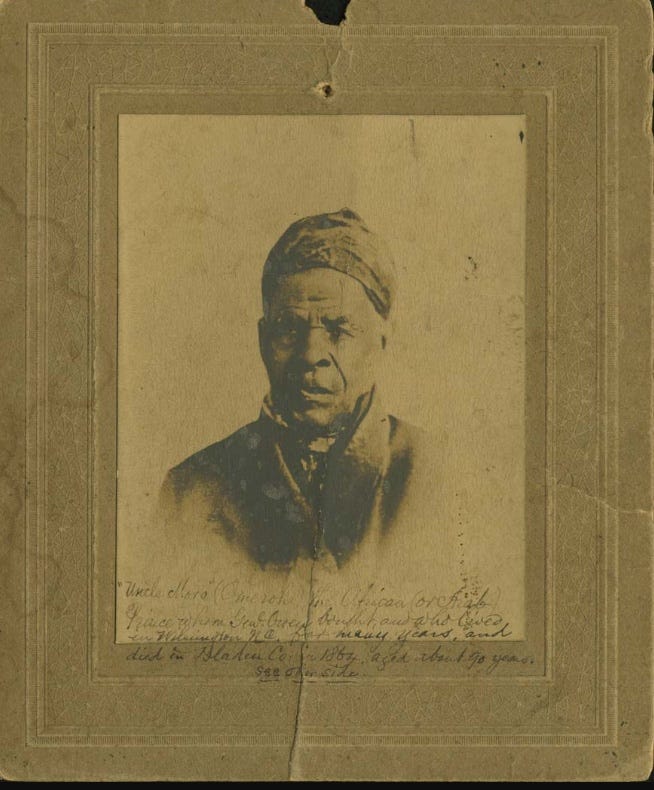
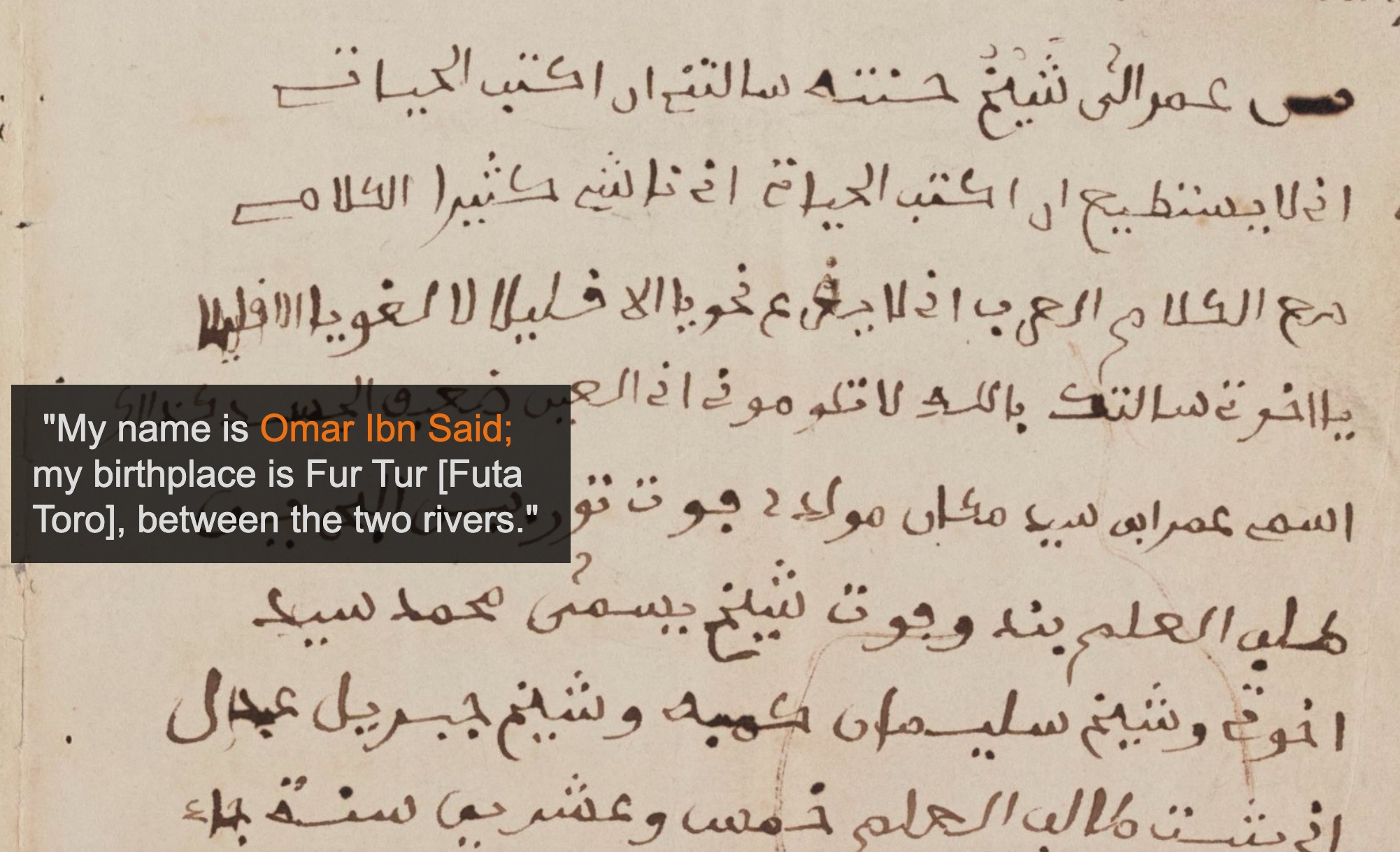
Omar Ibn Said was captured in Futa Toro and sold into slavery in North Carolina in 1807. In 1831, he wrote an autobiography in Arabic that, rather than opening with Christian conversion as white patrons may have expected, began with verses from the Qur’an, including Surah al-Mulk. The manuscript — now at the Library of Congress — demonstrates advanced Islamic education sustained across decades of captivity.
Bilali Muhammad, enslaved on Sapelo Island, Georgia, authored a thirteen-page Arabic manuscript from memory outlining Islamic legal principles. The Bilali Document, preserved at the University of Georgia, discusses ritual purification, prayer obligations, and devotional structure. It reads like someone who had studied law, because he had.
Ayuba Suleiman Diallo, enslaved in Maryland in the 1730s, was the son of a prominent Muslim cleric in Senegambia. He wrote letters in Arabic that reached English officials; his literacy and status eventually helped secure his manumission. Contemporary accounts describe him refusing pork and maintaining ritual observance under enslavement.
These men give us rare documentary windows into Muslim life under slavery.
Muslim women were present in the regions from which many enslaved Africans were taken. Women from Muslim-majority communities participated in Qur’anic education and devotional life. Demographic records confirm they were captured and transported to North America, but their names rarely appear attached to Arabic manuscripts, obscured by the broader archival silencing of women’s experience under slavery. If men were praying in fields and writing legal treatises from memory, it is difficult to imagine that women laboring in kitchens and cabins and raising children under surveillance did not also carry fragments of Islam with them. American religious history is often narrated as though Islam arrived recently, layered onto an otherwise Judeo-Christian foundation.
Ramadan in America did not begin in suburban mosques or citywide iftars. It began in bodies that had every legal reason not to fast and, at least sometimes, chose to fast anyway.
If we are going to talk about Ramadan in America, we have to begin there.
Stay tuned for Part II of Ramadan is America on how Islam shaped early American diplomacy.
This is such an important intervention. Many of the enslaved practiced Islam. We have been miseducated to believe that the enslaved had no history, but they did. Many were scholars and doctors and astronomers and lawyers. They were educated and came from communities with deep ties. As many celebrate Ramadan around the world, we should remember those who practiced in secret.
Interesting and painful to read. Thank you