


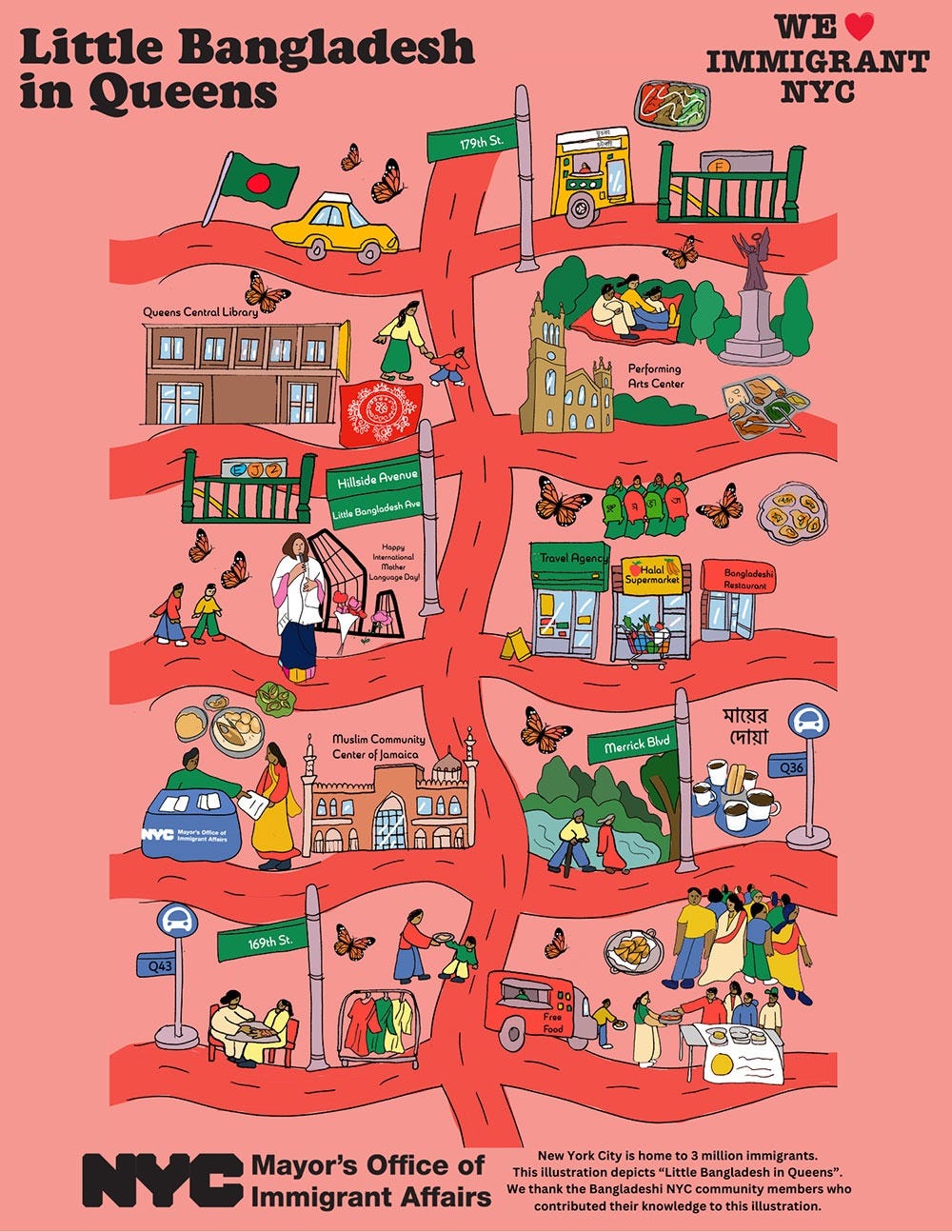
Happy Immigrant Heritage Month!
This June, the government wants us to celebrate immigrants. But I know many of you are asking the same question I am: Is that really possible right now?
How do we celebrate at a time when our communities are afraid to leave their homes? When folks are being abducted in broad daylight, and children are getting sick in horrific conditions inside detention centers? When allies are losing their lives just for defending their immigrant neighbors?
Our story is profoundly worth celebrating, and the country telling us to celebrate is also, right now, the most hostile it has been to people living that story in at least a generation.
The Origin Story
Immigrant Heritage Month has been observed every June since 2014. It grew out of an initiative during the Obama years, back when comprehensive immigration reform felt—however briefly—like it might actually happen.
The goal was to shift public sentiment. The hope was that if Americans could see themselves in the immigrant story (and most can, if they go back far enough), the politics would naturally follow.
Twelve years later, we are still making that case.
This year, cities across the country are trying to mark the month with intention:
New York City themed its celebration “Immigrants Power New York,” using a power grid as a visual reminder that we are the connective infrastructure holding the city together.
Colorado’s governor formally proclaimed June as Immigrant Heritage Month, highlighting that one in nine Coloradans is an immigrant, contributing an estimated $9.5 billion in state taxes annually.
Boston’s City Council adopted a resolution officially recognizing June 2026 as Immigrant Heritage Month, honoring the essential role immigrants play in the city’s business ownership, workforce participation, and cultural diversity.
The symbolism is beautiful, and it isn’t subtle. But unfortunately, neither is what’s happening on the streets. The case for our belonging is more urgent—and the audience far more hostile—than the founders of this month ever imagined.
The Reality on the Ground
While America puts up the celebratory bunting, we have to look clearly at the policy landscape we are navigating right now.
This is a neighborhood story: In fiscal year 2025, ICE recorded more deportations from within U.S. communities than Border Patrol apprehended at the Southwest border. The woman who got picked up at the bus stop while going home from work to her kids, the man behind the counter at the halal cart, and the grandmother who has lived in the same apartment for thirty years.
A deadly year: 2025 was the deadliest year in ICE custody in two decades. At least 32 people died—matching the all-time highest record previously set in 2004.
Birthright citizenship under fire: As tent camps operate across the country in brutal conditions, the administration is actively asking the Supreme Court to strike down the 157-year-old guarantee that if you are born on American soil, you are American.
A slashed safety net: The refugee admissions cap for fiscal year 2026 currently sits at 17,500. Under President Biden, just a year ago, it was 125,000. That is an 86 percent reduction. More than 128,000 refugees who had completed full security vetting—who sold their belongings and gave up their housing—were left stranded when the administration suspended the program on its first day. The few slots that do exist this year are allocated primarily to white South Africans.
Heritage Isn’t Just History
The story of immigration to this country is genuinely, stubbornly beautiful. My parents came to this country in 1983, but America wasn’t their first attempt at finding a life in the Western world. They lived in Germany first—a country where, as Bangladeshi migrants, they had absolutely no pathway to citizenship. The U.S. was the place where they believed true belonging was actually on offer.
The communities Port of Entry is built to serve are the most resilient, creative, and tenacious people I know. That doesn’t stop being true just because the government is actively trying to dismantle the legal architecture that made our arrival possible.
So, here is my ask of you. Let’s celebrate our fierce, beautiful existence, and let’s absolutely refuse to let the celebration become a cover story. The case for immigrants—for the value, humanity, and belonging of people who came here, who are still coming, and who are being detained as you read this—is not a historical claim. It is an urgent, present-tense reality.
The archive is ours to build. Let’s keep building it together.
I love this, Jennifer. I think it's especially important now because immigrants need to feel seen and appreciated even if they can't feel safe right now. The former can help them endure the latter.