


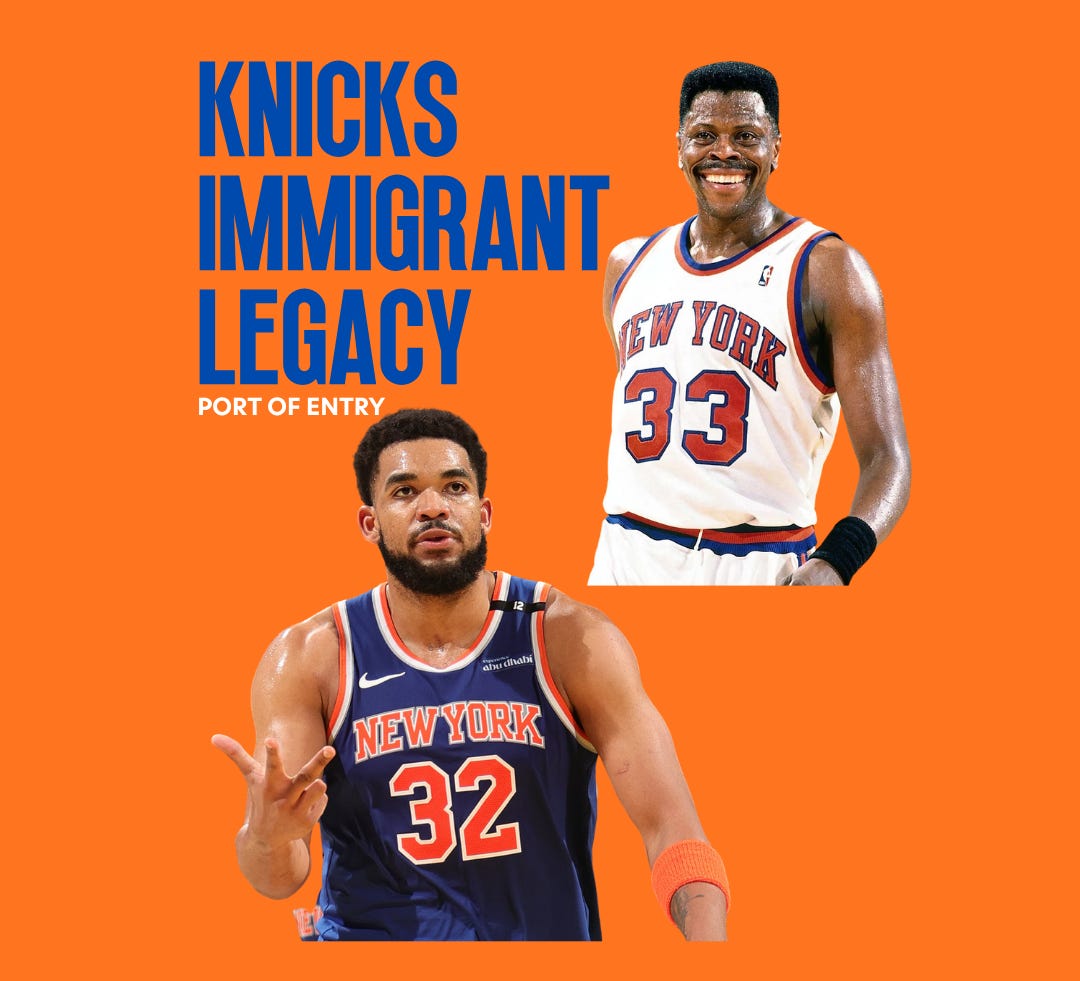
Last night was BROLIC, as we say here in NYC. The Knicks made an epic comeback in the NBA finals when they were behind by 30 points and if that isn’t symbolic of the city they play for, made up of immigrants, kept running by immigrants and led by an immigrant mayor, then I don’t know what is.
That kind of resilience—the refusal to fold when the math is against you is the exact energy I grew up watching my immigrant father channel from our living room in Queens from the 80s to the 2000s.
The Ewing Era: Grinding for Belonging
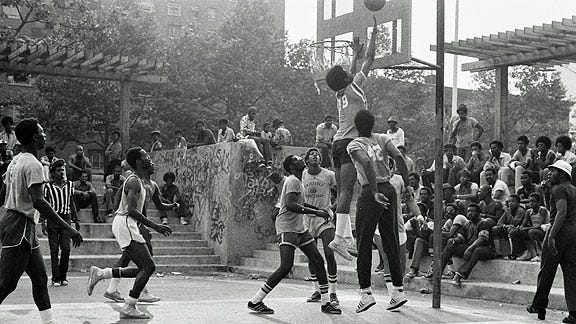
My father arrived in New York in 1983. He had two days off a week—the restaurant industry’s version of a weekend, Sundays and Mondays—and he spent them the way a lot of immigrant men in Queens spent their days off in the 1980s and 90s: learning America through television. My father’s commitment to this was not casual. He could tell you stats on any player in almost any American sport, immediately, without looking anything up.
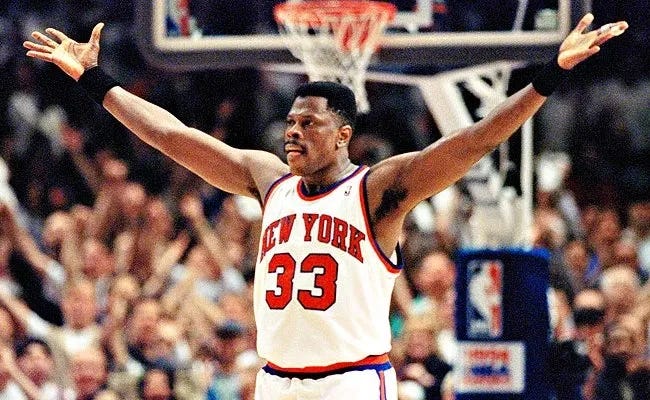
The Knicks were always on. I grew up with the silence of squeaky sneakers, the thud of bodies, the roar of the Garden crowd coming through the speakers. Knicks legend Patrick Ewing who holds nearly every major Knicks franchise record (points, rebounds, blocks) but never won the championship was the relentless force in the period of my father’s youth.
An immigrant watching another immigrant on television–both figuring out their place in America.
Patrick Ewing moved from Jamaica to Cambridge, Massachusetts at twelve years old in 1985 and in his own words, still had an accent and never played basketball until he immigrated. Yet, by the time the Knicks drafted him first overall in 1985, he was already the most dominant big man in the college game. What he gave New York for the next fifteen years was something the city recognized in itself: a relentless, physical, never-quite-enough strife.
The Science of Fandom as Citizenship
Academics who study immigrant communities actually have a name for what my father was doing on game nights. Decades of research show that for newcomers, sports fandom is a vital tool for adaptation—a way to establish connections, build community, and feel at home in a new setting while still identifying across borders.
The franchise’s winning foundation was laid by Red Holzman, the son of Jewish immigrants who coached their only championships in the ‘70s. By the time Pat Riley took over in the ‘90s, the team was built on pure grit and a willingness to absorb punishment. You had guys like Rolando Blackman, a Panamanian immigrant who learned English on the fly in Brooklyn, grinding his way to that ‘94 Finals run. And Patrick Ewing was the center of it all—unmovable, relentless, the face of a franchise that never quite won but never stopped grinding.
Linsanity: The Impossible Dream
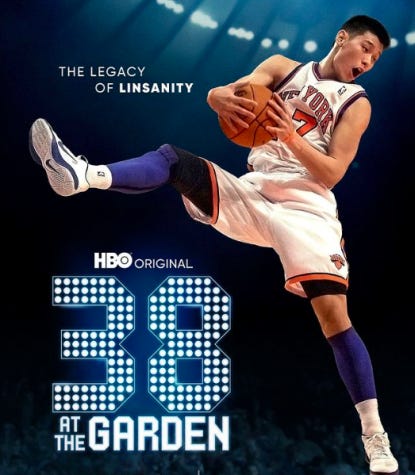
I write a lot in this space about what we inherit as the children of immigrants—how we carry both the bone-deep self-doubt and the wild, impossible tenacity of people who dared to invent new lives in a new country. The story of the immigrant legacy of the Knicks is incomplete without the Linsanity period. Jeremy Lin’s parents, Gie-Ming and Shirley, emigrated from Taiwan to the U.S. in the 1970s. Like my own father, Gie-Ming actually learned basketball by watching NBA broadcasts, before teaching his sons how to play at the local YMCA.
For a few magical weeks in February 2012, a phenomenon hijacked the Garden. Here was an Asian-American kid who had been passed over by every team in the league, crashing on his brother’s couch on the Lower East Side, completely invisible to a sports world that couldn’t see past its own rigid prototypes. In fact, he was just days away from being cut from the team entirely so they wouldn’t have to pay out his contract. But the Knicks were in a brutal losing slump, key players were all hurt, and the head coach, Mike D’Antoni, was on the verge of being fired. Completely out of options, the coach put Lin in the game as a desperate, absolute last resort.
Lin responded by scoring 25 points against the New Jersey Nets, single-handedly saving his coach’s job and his own career. It was a breakthrough so sudden and electrifying that fans on the internet immediately smashed his name together with the word “insanity” to coin “Linsanity”—a catchphrase that instantly took over the cultural zeitgeist and the covers of the New York tabloids. A week later, he put up a massive 38 points on national television against Kobe Bryant and then came Valentine’s Day in Toronto: a tied game, the final seconds ticking away, and Lin calmly stepping back to hit a perfect, cold-blooded game-winning shot.
For every kid of an immigrant who was taught the survival math of keeping your head down, staying quiet, and making yourself small, watching Lin command the Mecca of basketball was a cultural revolution.
A New Generation: The Immigrant Story as Main Text
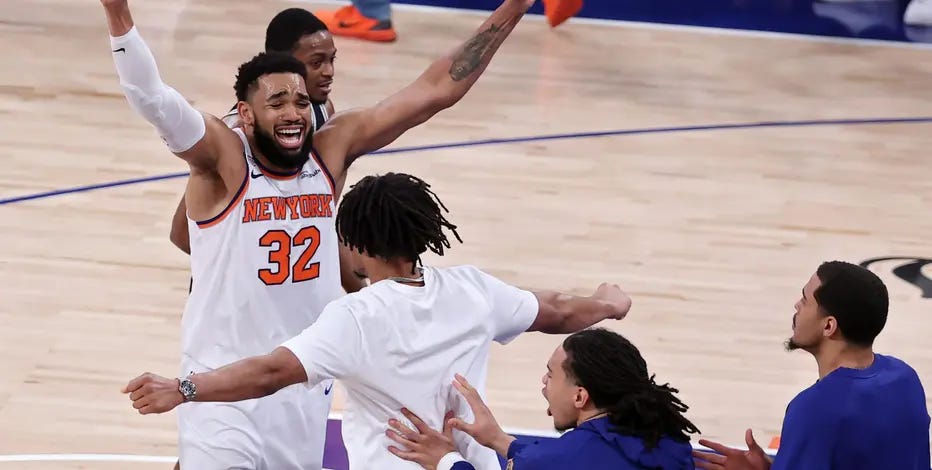
Today, the Knicks are back in the Finals after twenty-seven years, and the immigrant story is no longer subtext. Karl-Anthony Towns grew up in New Jersey, the son of a Dominican immigrant mother named Jacqueline, who crossed into a new country and built a life and then died of COVID-19 in April 2020, at the height of the pandemic, while her son was in NBA quarantine and could not get to her. He has spoken about her death with a grief that is also a kind of testimony—to what immigrant mothers carry, to what they leave behind. The indisputable MVP who delivered the winning shot of last night’s game, OG Anunoby was born in London to Nigerian parents and came to America at four years old.
Showing Up When the Environment Turns Hostile
New York has always moved in cycles—arrival and backlash, a fist opening and closing. My father lived through it all. He was here after 9/11, when men who looked and prayed like him suddenly became suspects in the city they’d spent years building. He is still here now, watching a federal administration make attacking immigrants its entire cornerstone. Between the executive orders slamming doors shut and the relentless rhetoric villainizing the very people who feed, clean, and build this country, it’s a hostile environment explicitly designed to force immigrants into retreating.
But the ethics of this city—and the ethics of these Knicks—reject that. You can’t deport the hustle. You can’t rip out the engine of New York and expect it to run. You don’t run when the math is against you or the room turns hostile. You show up. You grind. You come back next season.
And once in a lifetime, you tip the ball in for the winning shot and watch an entire city spill out into the streets, radiating with hope.