


In 2013, an eight-story factory building collapsed in Dhaka, Bangladesh, killing more than 1,100 garment workers—most of them women making clothes for Western brands. Thirteen years later, the industry is bigger than ever. The workers are still dying. And our culture is still being sold on runways and fast fashion stores without credit.
The global fast fashion market has grown to $150 billion in 2025, and fewer than 2% of the industry’s roughly 60 million workers earn a living wage. Platforms like Shein and Temu have pushed the race even further to the bottom and they’re disproportionately marketed to younger, lower-income consumers—including many descendants of immigrants for whom the price point feels like access.
It is access built on the backs of women who look like our families.
Last November, Amnesty International documented what may be the most comprehensive reckoning with the industry to date— a pervasive “climate of fear” across garment supply chains in Bangladesh, India, Pakistan, and Sri Lanka, where joining a union can mean harassment, firing, or physical attack. The report also shows how fast fashion brands are complicit in these human rights abuses despite denying this narrative for decades.
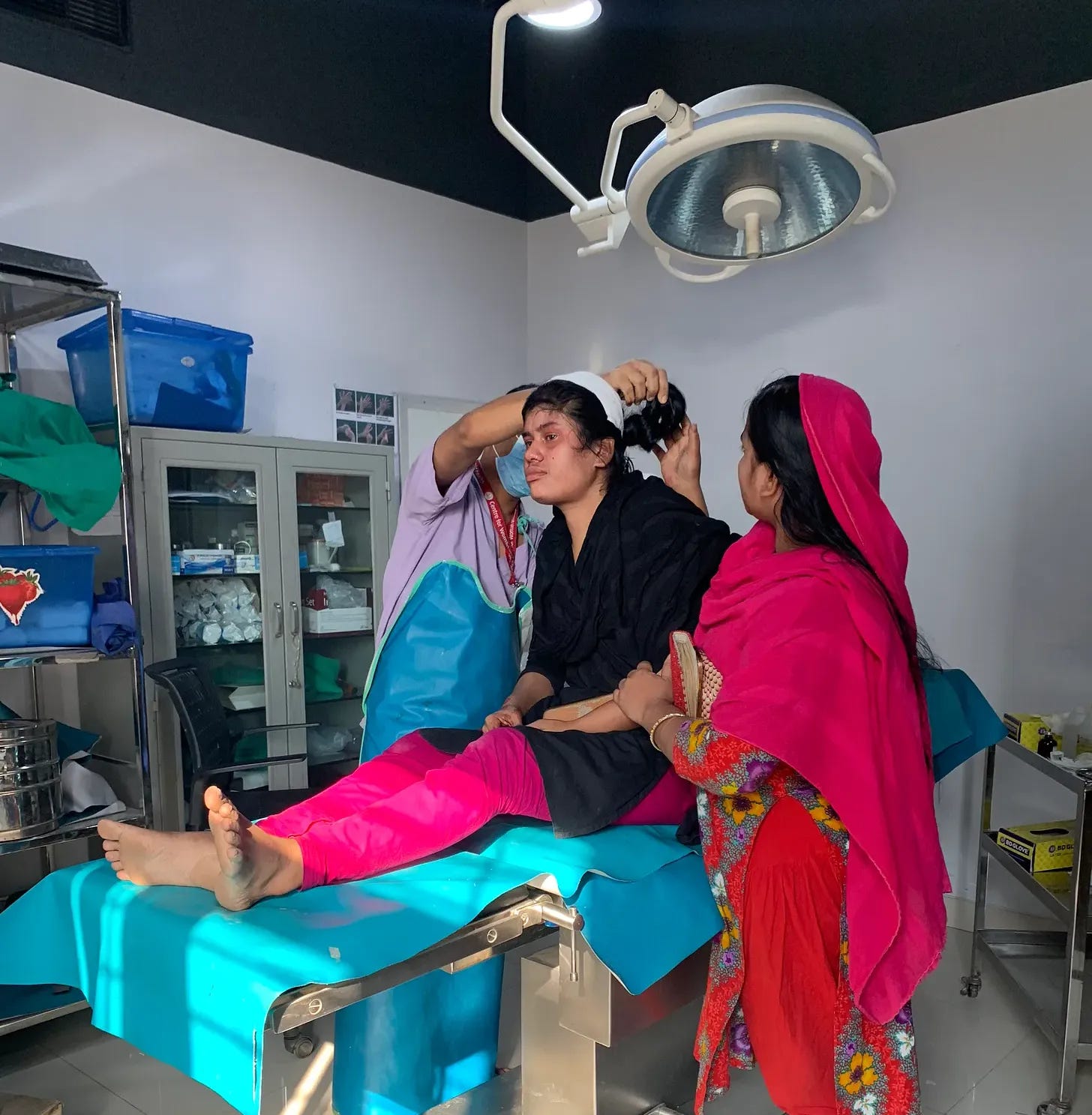
When I was a correspondent in Bangladesh, I followed garment workers to the hospital after a protest turned violent. The photo above is from that day —Bobita with her head bashed in, getting stitched up in a crowded ward. No one from her factory came to check on her, except her colleagues who were also attacked.
The story ran on Elle.com. Then the factory owner threatened to sue. As a freelancer, I had no protection so Elle took it down. The factory owner had more legal recourse than the woman whose head they’d cracked open and the reporter telling their story. You can still read the piece here.
I tried to follow up with Bobita many times after that. Eventually she left the slum where she was renting a room and no one knew where she went. Women like her who often make our clothes, who get hurt fighting for a living wage, who tell their stories to journalists vanish, while the industry keeps moving.
For South Asian Americans, these are our aunties and cousins. When a $12 Zara tunic gets coded as “boho chic,” someone’s relative made it for pennies and someone else’s culture got laundered into a trend. The aesthetic travels. The credit doesn’t. And neither does the money.
The piece below is the one I wrote last year, connecting the dots between the cultural appropriation, colonial economic history, and the fast fashion industry and not much has changed.
Port of Entry pieces go behind the paywall after two months — but I’ve unlocked this one for the 700+ readers who’ve joined since it first ran. If this is the kind of storytelling you want to exist in the world—reporting and deep analysis that treats descendants of immigrants as the complex, politically awake people we are—consider becoming a paid patron. There's no other place doing exactly this, for exactly us.
— Jennifer
While We Argue Over Appropriation, South Asian Workers Are Still Dying

Long before South Asian styles became music festival staples or red carpet “statements,” they were prized commodities in a global economy. Cotton muslin from Bengal, so fine it was nicknamed “woven air,” dressed Mughal emperors and European aristocrats alike. Chintz and calico from South India fueled an 18th-century fashion craze in France and Britain so intense that lawmakers banned their import—not out of offense, but fear that European industries couldn’t compete.