

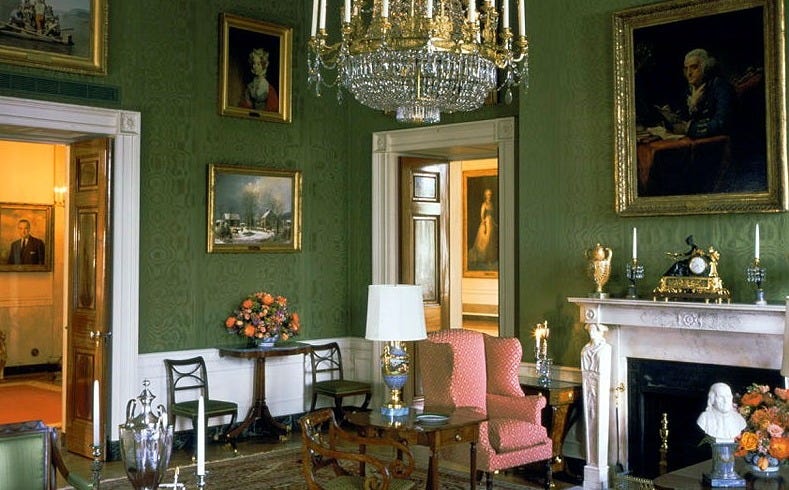
In 1805, The United States was barely thirty years old when the White House hosted its first iftar. Sidi Soliman Mellimelli, a diplomat from Tunis, arrived in Washington D.C. to negotiate with a young republic that had been at war with his sovereign’s neighbors.
President Thomas Jefferson invited him to a state dinner at 3:30 PM, but Mellimelli sent word back that he could not eat until sunset because he was fasting for Ramadan. In a moment of quiet, pragmatic pluralism, Jefferson—who owned a well-worn 1765 translation of the Qur’an—simply moved the clock. He updated the invitations to read “precisely at sunset.” It was the first time the fast was broken at the President’s table, but it wasn’t the first time it was broken on American soil. While Mellimelli dined with the elite, thousands of enslaved Muslims across the South broke their fasts in the shadows of slave quarters, practicing a faith the law refused to recognize even as it profited from their labor.
For nearly two centuries afterwards, Ramadan and Muslim life was absent from the halls of power. It existed quietly in the shadows of Southern plantations, preached on city street corners by the Nation of Islam and practiced in the first mosques of the Midwest but it remained invisible to the state. Islam and Ramadan simply wouldn’t have a formal place at the federal level again until the 1990s.
By the 1990s, the “triple-threat” of Muslim American diversity—African American Muslims, the post-1965 Immigration Act professional class, and a new wave of refugees—had grown to roughly 1% of the population. In 1996, the Clinton administration finally acknowledged this growth, hosting the first official White House Eid celebration.
In early 2001, President Bush turned the White House Iftar into an official yearly tradition. He filled the State Dining Room with Muslim leaders and diplomats to celebrate Ramadan, making it a staple of the American presidency. But the timing was surreal, just a few months after this big gesture of inclusion, the Twin Towers fell on 9/11, changing the meaning of that bridge-building forever.
Bush kept the gesture of solidarity. In the weeks after 9/11, he stood at a podium and said plainly,“Islam is peace.” He visited a mosque. He broke fast publicly with Muslim Americans while the country convulsed with grief and with rage directed at anyone who looked, prayed, or dressed like the enemy the nation had just named.
But the administration was simultaneously building a surveillance apparatus that treated every Muslim neighbor as a potential threat. The NYPD Demographics Unit became the face of this duality, mapping neighborhoods and infiltrating mosques between 2002 and 2014. This created a haunting paradox—the same government that invited you to eat dates at the White House might have had an undercover officer sitting in the back of your mosque for afternoon prayer earlier.
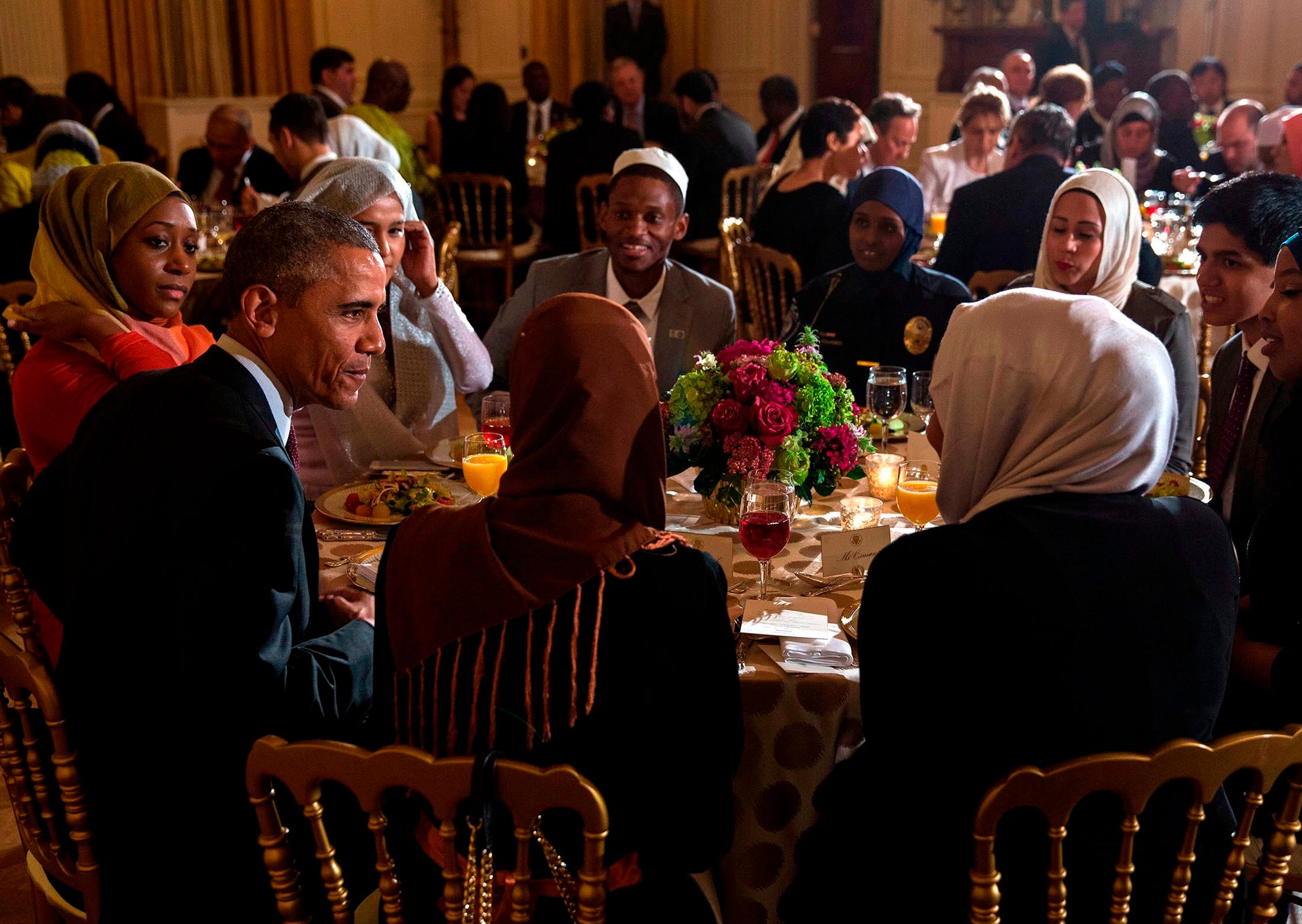
The Obama years were all about trying to make the Muslim community feel like a normal part of the American story. At the 2010 Iftar, he even famously stood up for the right to build an Islamic center near Ground Zero. But, even as he normalized the image of Muslims in the “American fabric,” his administration presided over the expansion of drone programs and the “Countering Violent Extremism” (CVE) initiatives that many community leaders felt continued to stigmatize their youth. The dinner invitations were more frequent, but the “security-first” lens remained firmly in place.
The tension finally snapped over the last decade. In 2017, Donald Trump broke tradition by canceling the Iftar following the “Muslim Ban. In 2018, he brought it back, but with a catch. He filled the seats with foreign diplomats instead of American Muslims. By leaving out local leaders and lawmakers, he turned a community tradition into a strictly diplomatic photo-op. And honestly? The community was fine with it. Most major groups said they would’ve declined the invite anyway.”
By Ramadan 2024, under President Joe Biden, the boycott became nearly total. Despite Biden’s initial efforts to restore a festive atmosphere, the community refused the invitation amidst the humanitarian crisis in Gaza, holding a “People’s Iftar” in the rain outside the White House gates instead.
Fast forward to Trump’s second term in 2026, and things have shifted back to a more formal, distant kind of diplomacy. The official ‘Presidential Messages on Ramadan’ still talk about spiritual growth, but the welcoming iftar and eid celebrations at the White House were a short lived affair between the late 90s and 2010’s.
This is such an interesting history!