


If you have information about children affected by immigration enforcement, please reach out to me at jennifer@portofentrymedia.com or on signal.
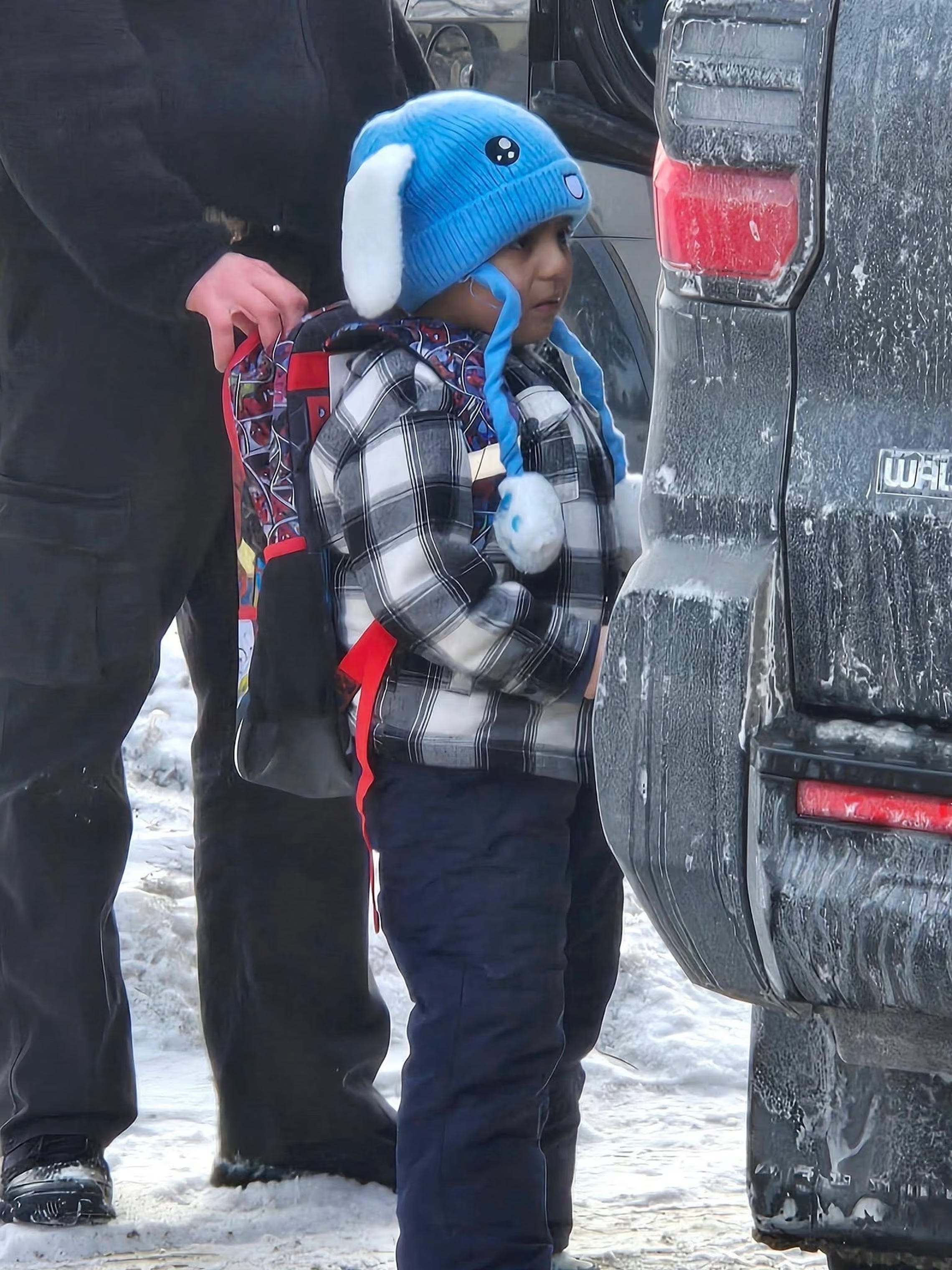
Liam Ramos is just five years old and yet Immigration and Customs Enforcement agents used him as bait.
The preschooler had just arrived home with his father on a Tuesday afternoon in Columbia Heights, Minnesota. As they pulled into their driveway, ICE agents approached. According to school officials, officers had the child knock on the family’s door and ask to be let in—a tactic to see if anyone else was home. Then they detained both father and son.
“Why detain a 5-year-old?” Superintendent Zena Stenvik told CBS News. “You can’t tell me that this child is going to be classified as a violent criminal.”
Liam’s family was following U.S. legal parameters with an active asylum case and no deportation order. That didn’t matter. He and his father were taken to a detention center in Texas, where they remain today.
A Pattern of Terror
In the months I’ve been reporting on immigration enforcement under the Trump administration, the nature of the crisis has fundamentally shifted. What began as children fearing what might happen has escalated into children witnessing their parents snatched off the streets in front of them, being left home alone when caregivers are arrested, and experiencing detention conditions that advocates describe as deliberately cruel.
The Columbia Heights Public School District has become an unlikely frontline. Four of their students have been taken by ICE in recent weeks. A 17-year-old boy was pulled from his car on his way to school. A 10-year-old fourth grader called her father while being detained to tell him ICE agents were bringing her to school—by the time he arrived, both his daughter and wife had been taken to Texas.
Now ICE agents regularly station themselves near the schools, keeping children, parents, and staff in a constant state of fear. Teachers have been forced to explain to elementary school students what ICE is and what might happen if the agents come.
“We are asking to please reach out to your congressional representative to ask for an immediate and peaceful resolution to this occupation,” Stenvik said. “Please help us and other schools to again be a safe place where all belong and all succeed.”
Federal data obtained by the Deportation Data Project at UC Berkeley shows that more than 2,600 immigrant children across the country were arrested in 2025. Some are as young as four years old, here on asylum with their parents. Others are U.S. citizens, racially profiled and detained without cause.
The Science of Harm
When children are separated from their parents during immigration enforcement, the psychological damage is immediate and measurable. Adverse childhood experiences—or ACEs—are traumatic events linked to chronic health problems, mental illness, and substance abuse later in life, according to the Centers for Disease Control and Prevention. The toxic stress from these experiences can fundamentally alter brain development.
Children of immigrants already show higher levels of anxiety and ACEs compared to children in households where immigration isn’t a constant fear. As I previously reported for Port of Entry, research published in the European Child & Adolescent Psychiatry journal examined 425 children in detention and found those separated from their mothers showed almost double the rate of emotional problems. Nearly half of separated children struggled emotionally. About a third showed serious signs of distress—withdrawal, anxiety, emotional volatility.
“This isn’t just the stress of migration itself,” the researchers noted. “The trauma of detention, separation, and uncertainty piles on top of whatever a child has already lived through—making everything worse.”
Becky Wolozin, an attorney with the National Center for Youth Law, told PBS Newshour that conditions inside family detention centers that read like something from another era. Children aren’t getting child-friendly food. Vegetables arrive moldy or infested with worms. One mother told Wolozin she had to suck the sauce off each piece of pasta to get her toddler to eat something plain, since the only other options were Teddy Grahams and juice.
The facilities violate the Flores Settlement Agreement, a 1997 court settlement requiring safe and sanitary conditions for detained children. But Wolozin argues even compliance wouldn’t be enough.
“In 1997, the standards were what the consensus was around child welfare at that time,” she said. “Now we understand and know so much more. We know that the detention of children of any kind is really harmful.”
Deterioration in Real Time
As children spend weeks or months in detention, Wolozin has watched them deteriorate. A previously happy toddler began hitting his mother and himself in the face, so distraught over the conditions. Well-adjusted children devolve into constant sadness, nightmares, crying every night.
“One teenage boy described to me—I mean, a big kid, he was maybe 16 or 17—that he cries every night when he goes to sleep in the detention center where he’s held with his father,” Wolozin said.
Medical neglect compounds the psychological harm. Regular childhood illnesses become dangerous. One child’s earache turned into such a severe infection that she experienced hearing loss after going untreated for an extended period. When she finally received care, the antibiotics were so strong they caused significant distress.
Water containers in the facilities show visible mold and algae. Lights stay on all night, preventing sleep. Constant interruptions make rest impossible. Children have no access to school—ICE admitted as much in recent court filings. The boredom and lack of stimulation make it even harder for children to cope.
“Many of these families were arrested while complying with various different forms of immigration requirements,” Wolozin said. “I think that makes it very clear that the goal is cruelty and the goal is to make people who came to the United States often seeking safety and security to flee the United States for the countries where they felt so endangered that they had to leave.”
A Public Health Crisis
Immigration enforcement, advocates argue, isn’t just a legal process—it’s a public health crisis for children. The impacts extend beyond those directly detained. Children whose parents are arrested experience secondhand trauma. According to research compiled by the Kaiser Family Foundation, family separation through detention and deportation affects household finances, health outcomes, and overall well-being for years.
The effects ripple through entire communities. Students are afraid to come to school. Parents are afraid to drop them off. Teachers struggle to focus on education while helping students process trauma and fear.
Back in Texas, Liam Ramos remains in detention with his father. His school district has hired an immigration lawyer to try to bring him home. His classmates wonder when—or if—he’ll return to preschool.
If you have information about children affected by immigration enforcement, please reach out to me at jennifer@portofentrymedia.com or on signal.