


Every May, the United States celebrates Asian American and Pacific Islander (AAPI) Heritage Month to honor more than 50 ethnicities, 60 nationalities, and 100 languages that fall under this umbrella. At Port of Entry, my mission is to highlight the stories of immigrant communities—many of them AAPI—all year round. It’s the foundation of my nearly two-decade career, so centering these voices is embedded in everything we do here. But I have always wondered: how and when did AAPI month actually start?
Like with so many milestones for communities of color in this country, it began with racism, of course.
Jeanie Jew’s great-grandfather came from China to help build the Transcontinental Railroad—and was later killed in an act of anti-Asian violence while advocating for his community. Decades later, his granddaughter carried that grief into the halls of Congress. In the 1970s, Jew looked at the bicentennial pageant America threw for itself, noticed her people were completely erased from the narrative, and decided to do something about it. She lobbied so relentlessly that 231 congressional members eventually co-sponsored her bill. Still, it took fifteen years—from 1977 to 1992—for the month to become a permanent annual observance.
So, what does the designation actually do?
In theory, it offers visibility, political leverage, and a mandated moment for schools and institutions to reckon with AAPI history. The month has also served as a designated on-ramp for vital civic organizing, driving voter registration, legislative advocacy, and community coalition-building.
What it hasn’t done, however, is make the community safe.
Anti-Asian hate crimes are still nearly three times higher than they were before the pandemic — and that’s just what gets reported to federal databases. Federal victimization surveys estimate that 42% of violent hate crimes go unreported, with many victims facing language barriers, fear of retaliation, or concerns about interacting with law enforcement because of immigration status. Anti-Sikh hate crimes surged 59% in 2025. Anti-Hindu hate crimes rose 12%. Anti-Buddhist hate crimes climbed 23%. The communities folded under the AAPI umbrella are not a monolith—but the violence tracking them doesn’t much care about that distinction.
Anyway. Here’s what I’ve been reading this month.
OUTRAGE: They Want Your Green Card. And They Want You to Leave to Get It.
Most people applying for green cards from inside the United States will now be required to leave the country and apply through consulates abroad, under sweeping changes announced by the Trump administration this week. USCIS framed the change as a return to the “ordinary immigrant visa process,” saying adjustment of status will be granted only when “extraordinary relief” is warranted. The process hundreds of thousands of people have relied on — filing from within the country where they already live, work, and pay taxes — is now “extraordinary.”
The Takeaway: They don’t have to deport you if they can make staying feel like the mistake.
FROM MY DESK: The Women Who Work While You Sleep
This one is mine, and I’m proud of it.
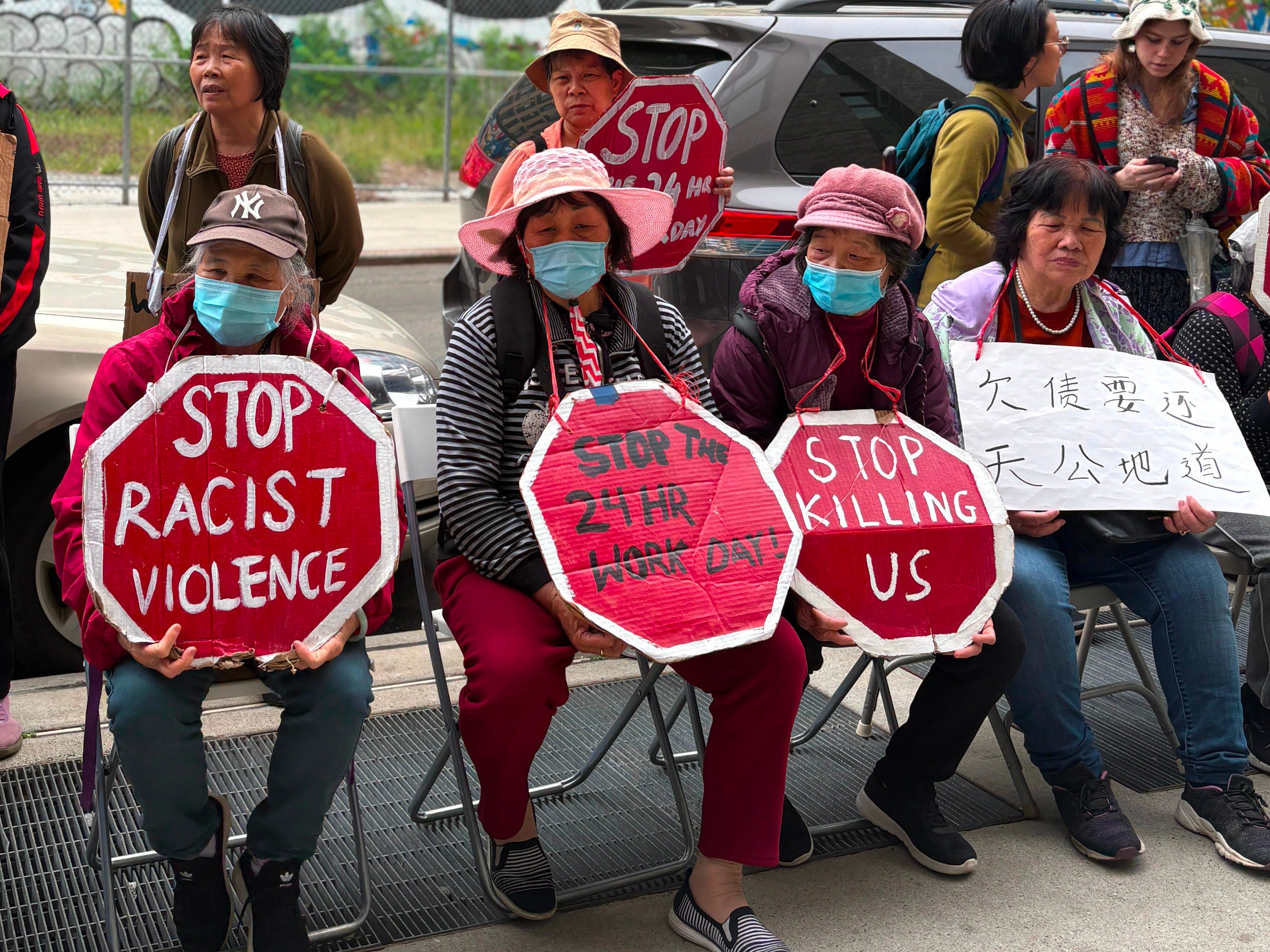
For over a decade, a coalition of mostly immigrant women—home care workers, many of them Chinese and Caribbean—have been fighting to end the 24-hour workday in New York. Under current state rules, live-in home care workers can be scheduled for 24-hour shifts and paid for only 13 of those hours — as long as they’re allotted three hours for meals and five uninterrupted hours of sleep without interruption. Workers say those breaks rarely come. Some report working up to 96 hours straight.
In April, workers launched an indefinite hunger strike outside City Hall, calling for passage of the No More 24 Act. After seven days, City Council Speaker Julie Menin promised a vote.
The Takeaway: The people keeping our most vulnerable neighbors alive are being robbed in plain sight. Spoiler alert: that vote still hasn’t come.
Read my piece in The Guardian.
GET IN DEEP: The Missing Bride of Anqoun by Rania Abouzeid
Anqoun is a town in southern Lebanon that Israeli ground troops invaded earlier this year, razing villages and displacing hundreds of thousands as they set up a buffer zone. Abouzeid goes into that wreckage and finds one woman’s story—a bride who disappeared—and follows it with the particular access that comes from being of the region and not just passing through it.
The Takeaway: Read it slowly. It’s the kind of journalism that makes you remember why the work matters.
CLOSE TO HOME: The Sacrifice Zone
For days, protesters have stood face to face against ICE agents outside Delaney Hall, a federal immigration detention center in Newark, NJ—the largest sustained immigration demonstrations since Minneapolis. People have shown up with homemade shields, old mattresses, and human chains to block the gates while batons came down on the crowd. They’ve been pepper sprayed, shoved, and arrested—and they keep coming back. Inside, detainees launched a hunger strike over alleged inhumane conditions while DHS denied it was happening. The governor was denied entry. State health inspectors were only allowed to see part of the facility. Slate senior writer Aymann Ismail lives nearby and went before the worst of the clashes — and what he wrote explains exactly why people aren’t leaving.
The Takeaway: The sacrifice zone has always been a
choice. Right now, people are putting their bodies on the line to say they reject it.