

How Islam was Rebuilt in Black America
RAMADAN IS AMERICAN PART 2: The Nation of Islam Era

In Part 1, we traced the first Ramadans observed on American soil—enslaved African Muslims who carried their faith across the Atlantic were forced to fast in secret. Hundreds of years later, their descendants inherited freedom but not the institutions that sustained their faith.
But the story didn’t end there.
A Mysterious Figure in Detroit
In 1930, a man named Wallace Fard Muhammad appeared in the Black neighborhoods of Detroit. No one really knew where he came from and there are no reliable government records of him. Some believed he was from the Middle East; others thought he was South Asian.
But Fard arrived at a moment of profound upheaval in the United States. Thousands of Black Americans had migrated north during the Great Migration to work in auto factories, only to encounter segregation, racial violence, and economic exploitation all over again.
Fard began teaching a version of Islam that blended Islamic vocabulary with messages of self-reliance, discipline, and racial uplift, speaking directly to a community that had been systematically denied dignity and autonomy. He gathered a significant following. And then, in 1934, he vanished.
A new leader stepped in: Elijah Muhammad, under whom the Nation of Islam was formally structured.
Discipline as Resistance
The Nation of Islam was controversial—both because it became the first major Muslim movement rooted in Black America, and because its theology differed significantly from mainstream Sunni Islam. It taught that Fard was a divine figure. It emphasized racial separation over integration.
But it did something else, too: it rebuilt Islamic practice where slavery had dismantled it. Ramadan observance, daily prayer, and moral discipline became central pillars. In a society designed to control Black bodies, that discipline was a form of dignity—a way to assert selfhood on one’s own terms.
According to scholar Edward E. Curtis IV in Islam in Black America, the Nation of Islam provided a religious framework that challenged internalized inferiority and reimagined spiritual and political possibilities for Black Americans.
Ramadan Behind Bars
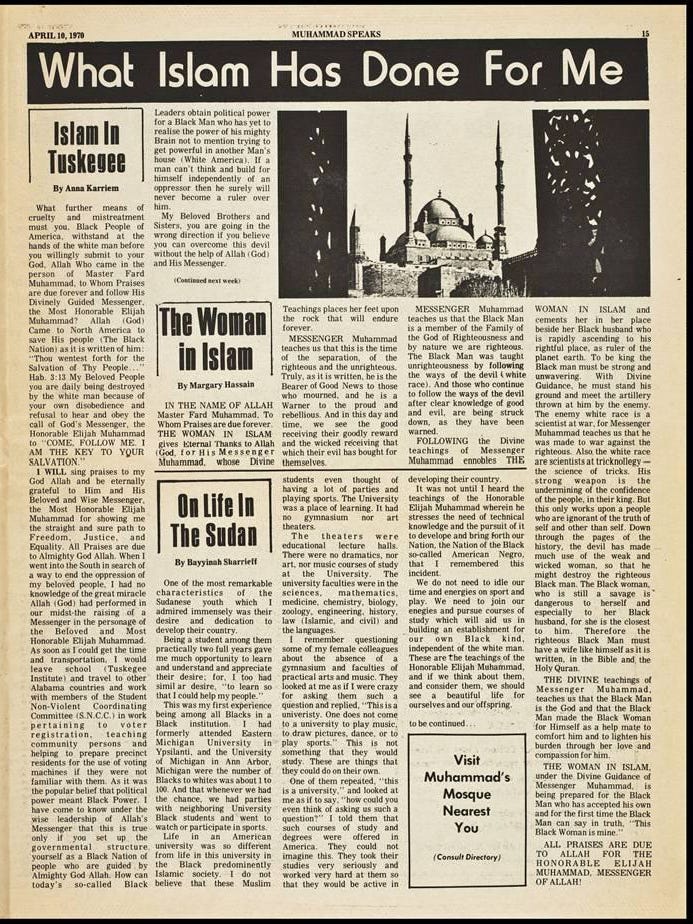
By the 1950s and ‘60s, Islam was spreading rapidly among incarcerated Black men through the NOI’s prison outreach programs. Muslim prisoners began demanding the right to pray, to study the Qur’an, and to fast during Ramadan. In 1964, the Supreme Court case Cooper v. Pate affirmed that Muslim prisoners could sue for violations of their religious rights—a landmark expansion of constitutional protections for religious freedom. Ramadan, once hidden and illegal, was now part of America’s legal landscape.
Malcolm X and the Struggle for Global Human Rights
No figure changed the story more than Malcolm X.
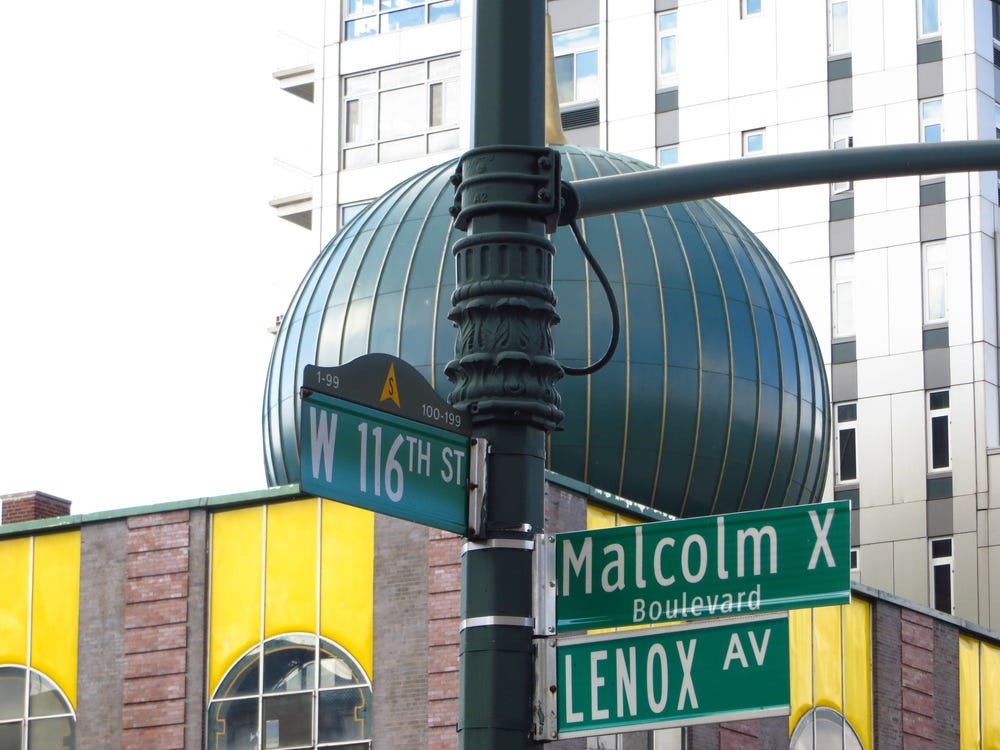
Born Malcolm Little, he converted to the NOI while in prison and became, by the Civil Rights era, the most electrifying spokesperson for Black Muslim life in America. Then, in 1964, he undertook the Hajj pilgrimage to Mecca. There, he witnessed Muslims of every race praying and breaking fast together. The experience transformed him. He embraced Sunni Islam, left the Nation of Islam, and reframed the Black freedom struggle as part of a global human rights movement—one that connected Black Americans to Muslims around the world.
It was a theological shift, yes. But it was also something bigger: a new vision of what Islam in America could mean.
Parallel histories
Black Muslim life didn’t develop in a vacuum. While the NOI was rebuilding Islamic institutions in Detroit and Chicago, immigrant Muslim communities were already quietly forming across the country.
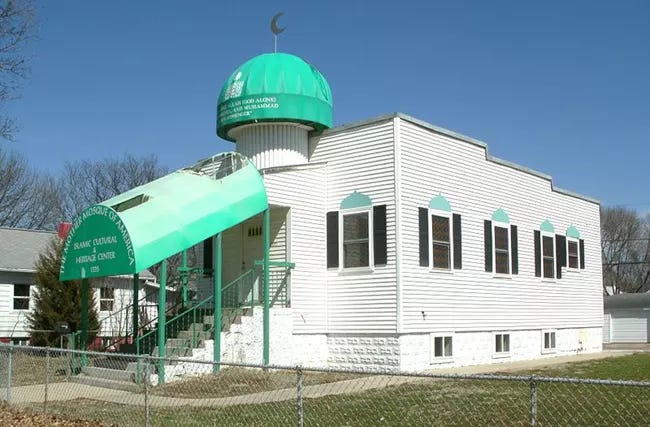
Albanian Muslims built a mosque in Maine as early as 1915. Syrian and Lebanese immigrants opened what became known as the Mother Mosque of America in Iowa in 1934. Yemeni laborers formed communities in Detroit and Buffalo in this era, too.
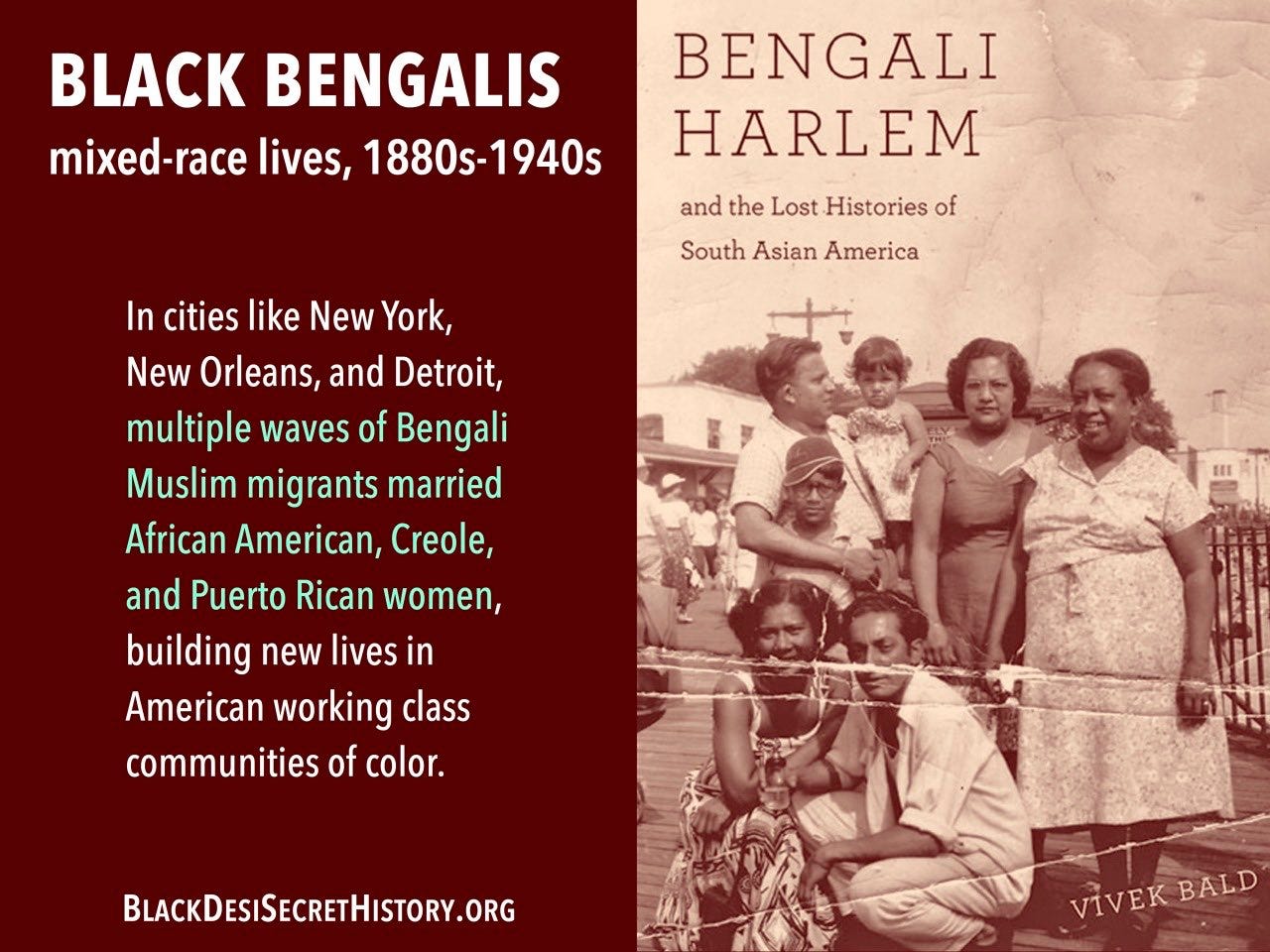
And in Harlem, something quieter had been unfolding for decades. Bengali Muslim sailors (from British colonial India, present day Bangladesh) settled in Harlem in the early 20th century (I was one of the first to interview the researcher for NYT years ago!), marrying into Black and Puerto Rican communities and building shared spiritual spaces. They opened silk and textile shops. They lived in Black neighborhoods, not apart from them. They were Muslim men fasting in Harlem apartments in the 1920s and 30s— decades before Islam was widely associated with immigration. By the 1960s, their children were already part of Black America.
This complicates the story we often tell about the clean separation between “Black Islam” and “immigrant Islam.” For some families, those identities were already intertwined.
But multiracial does not mean equal.
In the early 20th century, some Arab immigrants fought legal battles to be classified as “white” in U.S. courts. That designation provided access to citizenship and protection under segregation laws. Proximity to whiteness created distance from the Black struggle. Black Muslims bore the brunt of state surveillance and public suspicion. They were the visible face of Islam in a racially stratified society.
And yet, by the late 1960s, something new was happening.
Ramadan as Meeting Ground
Organizations like the Muslim Students Association, founded in 1963, began connecting immigrant Muslim students with Black Sunni communities. Urban mosques increasingly hosted multiracial iftars. For the first time at scale, Black American Muslims and immigrant Muslims were breaking fast together.
For decades, two Islamic histories unfolded in parallel — shaped by race in very different ways. And even as Muslims increasingly united through faith, anti-Blackness within many non-Black Muslim communities was real, and is present to this day
. Islam in America was rebuilding inside America’s racial hierarchy.
Stay tuned for Part 3 of Ramadan Is American.
This is such a fascinating history.