


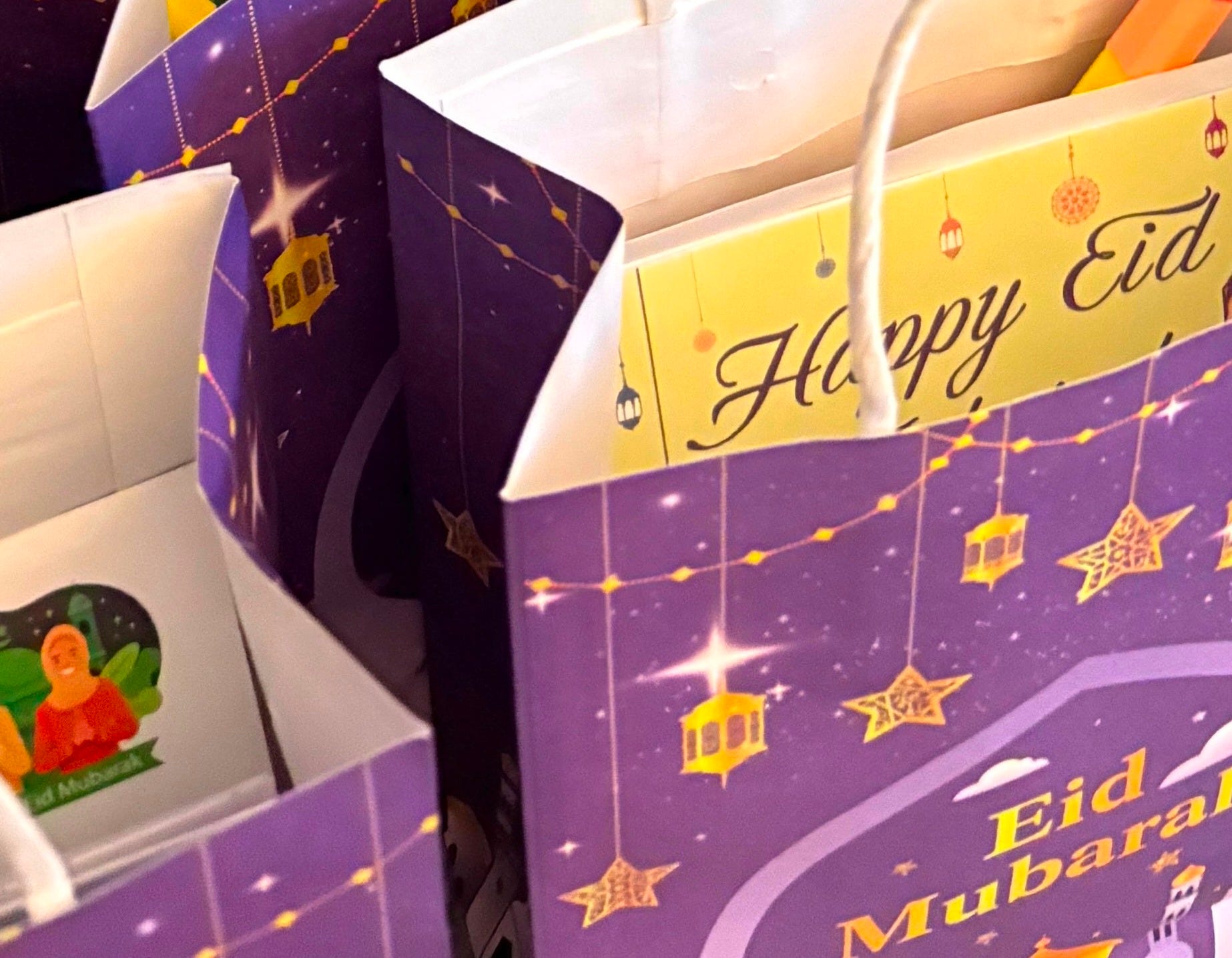
This weekend, across every corner of the globe, the Muslim diaspora is dressed in our finest. We are filling our homes with the scent of cardamom and rosewater, eating the most decadent foods, and—for those of us raising children—carefully passing down the traditions that make us who we are. We are giving our kids the “big” Eids we always dreamed of having when we were growing up here.
This weekend, as we celebrate Eid, we’re also closing out our series, Ramadan Is American.
It’s easy to feel like we’ve “arrived” when you look at the landscape of 2026. There are over four million Muslims in the United States. Target has a dedicated Ramadan aisle. West Elm sells crescent moon décor. Hallmark makes Eid cards. We are seen in a way that felt impossible a generation ago.
But as I watched the henna dry on my daughter’s hands, I couldn’t shake the thought that this visibility is a fragile thing.
A landmark civil rights report by CAIR documented 8,683 civil rights complaints involving Muslims in 2025—the highest number in thirty years.
has been two decades since 9/11. It has been years of interfaith dinners, Muslim-American elected officials, and #EidMubarak trending on social media. And yet, the hostility is at an all-time high.
We are more visible than ever, and we are more targeted because of it.
The past few weeks have made that contradiction heartbreakingly plain. In Houston, a parent-led Ramadan display at Bunker Hill Elementary was forcibly removed after complaints—in the same state that mandates the Ten Commandments be posted in every classroom. Multiple Republican lawmakers have felt emboldened to post Islamophobic statements that, only a decade ago, would have ended their careers.
None of this is new, even when it feels heavy.
We stand on the shoulders of those who kept the light burning in total darkness. Bilali Muhammad fasted in secret on a Georgia plantation, scratching his faith into scraps of paper in Arabic. Omar ibn Said, enslaved in the Carolinas, prayed toward Mecca when no one was watching. The Nation of Islam in the 1950s and ‘60s took a faith that had been beaten out of a people and turned it into something fierce, public, and proud.
That history is the ground beneath our feet. It is the foundation for every Chand Raat celebration, every Eid day off, and every cardamom latte. It’s a reminder that visibility has always been a battleground. The question was never just whether we could be seen—it was about who got to control the story of who we are.
And the story remains clear: Ramadan is, and has always been, American.
Join the Conversation
Thank you for walking this path with me over the last four weeks. This series has been a labor of love, but it only truly comes to life when it reaches you.
We are building a community here at Port of Entry, and your voice is the most important part of it. I’d love for us to close this chapter together:
What stayed with you? Of all the stories we’ve shared, which one mirrored your own experience or changed the way you see our community?
What should we explore next? This series is over, but our journey isn’t. If there’s a corner of the American Muslim experience—or any story of identity and belonging—that needs to be told, tell me about it.
Reply to this email and let’s talk. I read every single one of your messages, and I can’t wait to hear from you.
Wishing you and your loved ones a day full of light, safety, and joy.
Eid Mubarak,
Jennifer
Read the full series:
[Part 1] The Enslaved Who Fasted in Secret
| [Part 2] How Islam Was Rebuilt in Black America
| [Part 3] Iftar at The White House