


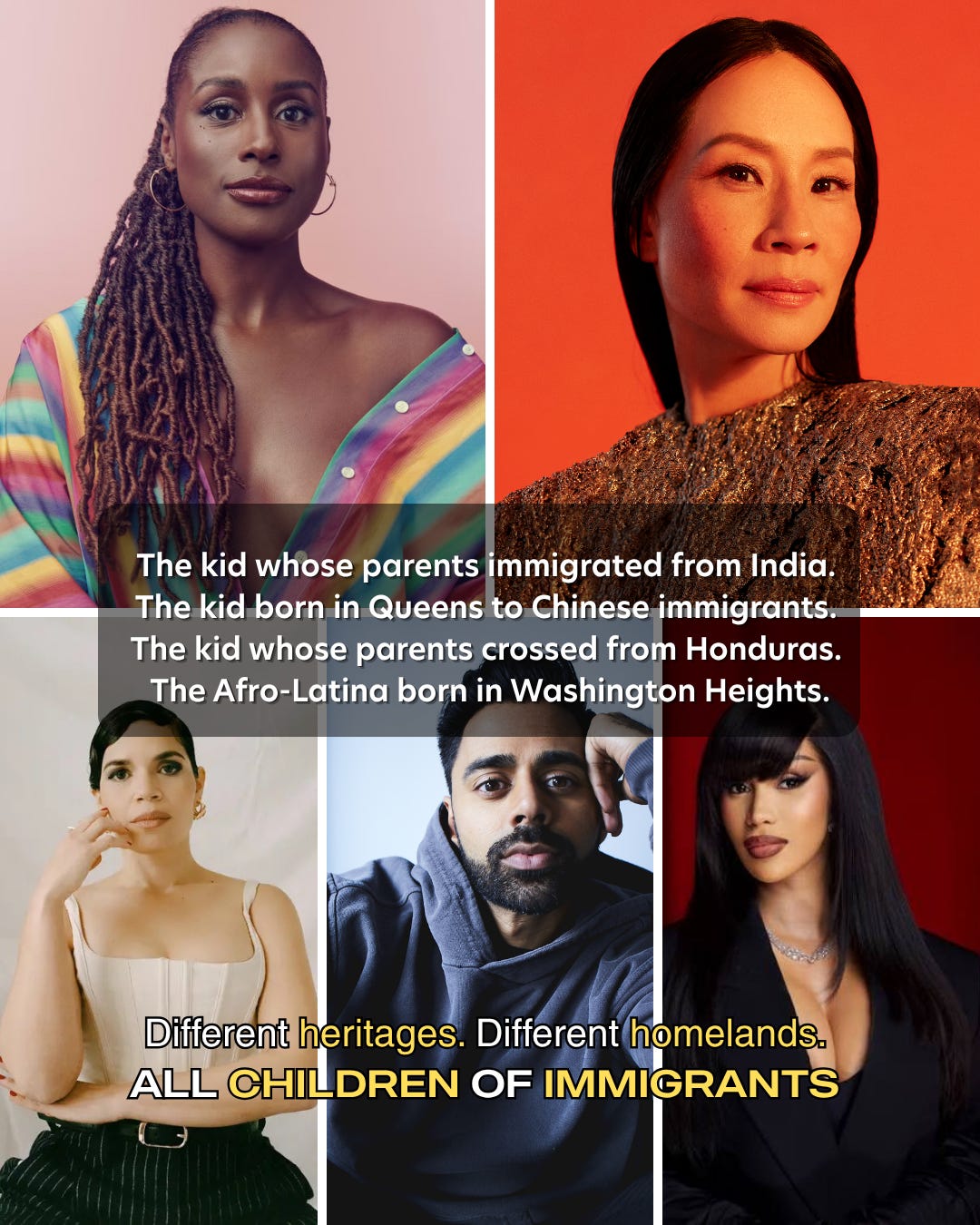
What if the descendants of Black and brown immigrants banded together?
Not as a metaphor. As a true to life bloc.
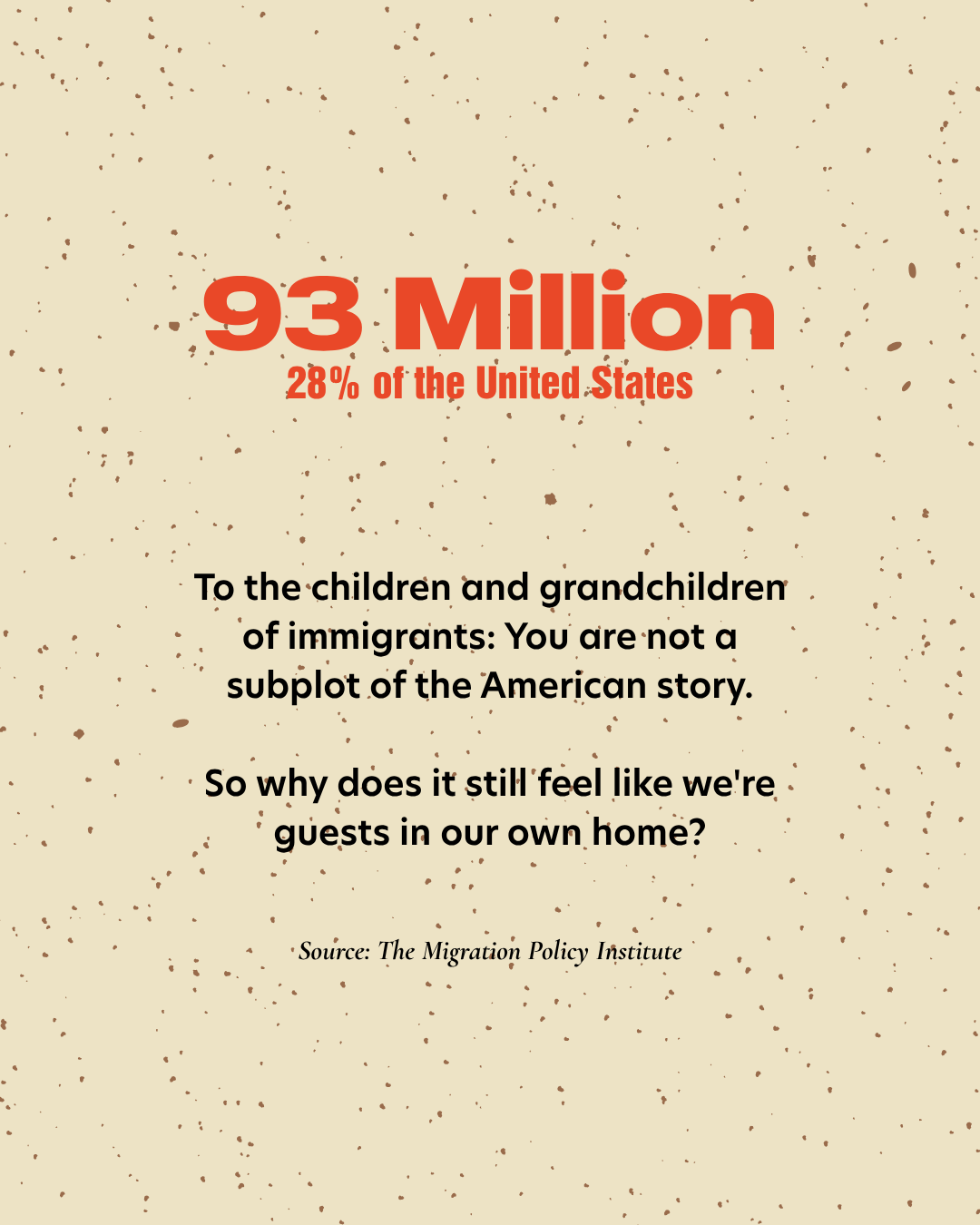
Immigrants and the U.S.-born children of immigrants make up more than 93 million people. That’s 28% of this country. More than 1 in 4 Americans. $1.7 trillion in economic activity a year is a market that no industry can afford to ignore, if it ever organized as one. Nearly half the Fortune 500 are founded by immigrants and their kids who already sit inside the rooms where policy gets shaped, who mostly never think to use that access on each other’s behalf. A community that size, voting as a bloc instead of getting split by whichever wedge issue is convenient that election cycle, doesn’t get ignored by anyone.
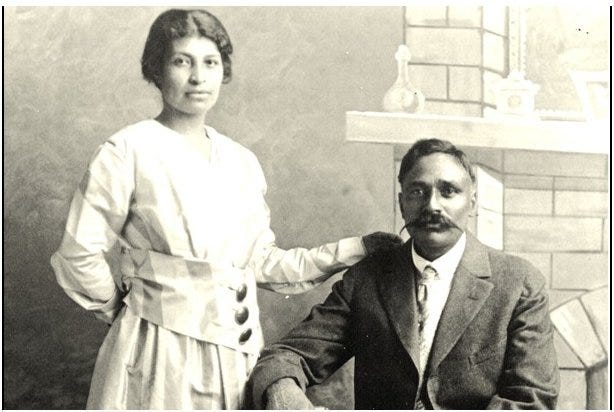
This isn’t hypothetical. It’s happened before, in smaller versions, and it worked exactly as well as the people in power feared it would. Punjabi Sikh farmers and Mexican laborers in early-1900s California didn’t wait for permission to see what they had in common—they built lives, families, and “Punjabi-Mexican” communities together, out of the same immigration laws that were trying to keep them both out. Asian and Black organizers found each other during the civil rights era, drawing on Black Power’s ideology and tactics directly — and once the Civil Rights Act made national-origin discrimination illegal, the door reopened for the rest of us in 1965. Every time solidarity like that has actually formed, it’s been treated as a threat significant enough to actively prevent—which tells you exactly how much power it holds.
Whether your family’s been here for generations or you just arrived, most of us carry some version of the same weight: displacement, adaptation, a history we were never taught, a racial hierarchy we got sorted into the second we landed.
So if there are 93 million of us, why does it still feel like we’re guests in our own home? Why are we all quietly working through the same identity crisis, completely alone?
Because that isolation is by design.
Colonial and racial hierarchies survive one way: by convincing marginalized people we have nothing in common with each other. It’s a playbook. It’s why the “model minority” myth gets weaponized to drive a wedge between communities of color.
They pit us against each other because a united diaspora of formerly colonized and enslaved people is a world-changing threat. That’s especially true of solidarity between immigrant and Black communities—the alliance this country’s racial hierarchy has always worked hardest to prevent, because it’s the one most capable of tearing that hierarchy down.
This is the mess I keep untangling at Port of Entry and it includes sitting with a harder truth I wrote about a few weeks ago: many of us call ourselves “immigrants” and “migrants” on land that was colonized first — land that was never any settler’s, or any of ours, to claim. Building solidarity across displaced communities means reckoning with that history too, not routing around it.
I know what it’s like to grow up belonging fully to neither world—American enough to be resented back home, foreign enough to never quite be let all the way in here. Some days that feeling makes you want to stop caring entirely and just look out for yourself. I’ve felt that.
But we can’t afford to look away because the work our ancestors did isn’t a one-time transaction. Wong Kim Ark won birthright citizenship for every child born on U.S. soil back in 1898. That should have settled it. Instead, 128 years later, his own great-grandchildren stood outside the Supreme Court this past spring, watching a different administration argue his case shouldn’t apply to today’s kids. They won again this past June. But they shouldn’t have had to fight that fight twice.
That’s what happens when 93 million of us stay strangers to each other: the same fights get fought over and over, one isolated family at a time, instead of once, together. Imagine what it looks like when we stop being convinced we have nothing in common, and start acting like the 93 million we actually are.
Let’s talk about it:
When was the last time you felt like a guest in your own home, even though you were born or raised here?
Reply directly to this email and let me know.